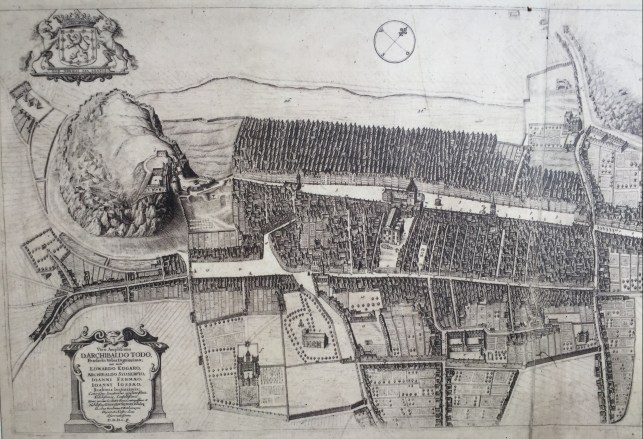
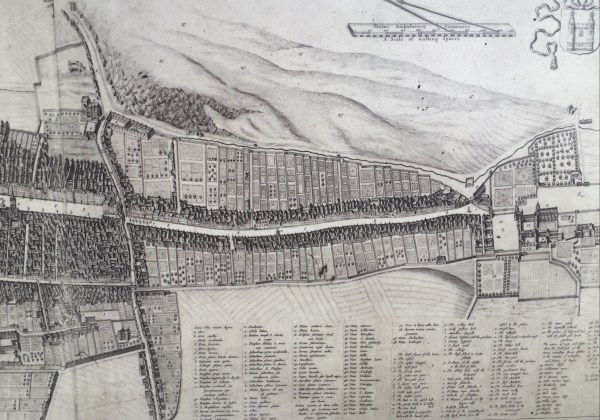
Another day, another castle. I’m so happy. Pictures below show the Royal Mile circa 1600s (D.D.D.C.), with Edinburgh Castle sitting atop the Mile to the West (left) and Holyrood Palace laying on the bottom (right.)
On your way east, towards the Palace, you come across John Knox’s House. It was built in the 1490s. It’s debatable if or for how long he actually lived there however. (It was also believed to be home of Queen Mary’s goldsmith.) Knox was the Scottish leader of the Protestant Reformation, founding the Presbyterian Church of Scotland.
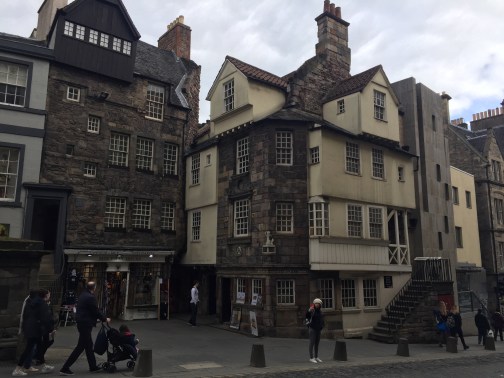
The Catholic Queen Mary and the the Protestant John Knox had a turbulent relationship.


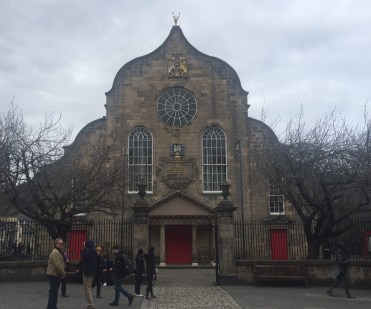
Right before you get to the Palace, on your left, is Canongate Kirk. It was built in 1688-1691. The Queens Granddaughter, Zara Phillips, was married there.


While Edinborough Castle is an old, ancient military fortress, Holyrood Place is more modern and decorative. The original Palace was built in 1503 by King James IV (previously Royals had stayed in the Abbey’s guesthouse.) It was the primary residence of Scottish Kings and Queens until 1603. That changed when King James became the King of England and moved to London. Presently, it is Queen Elizabeth II’s official Scottish residence. She stays there for a week in the summer.


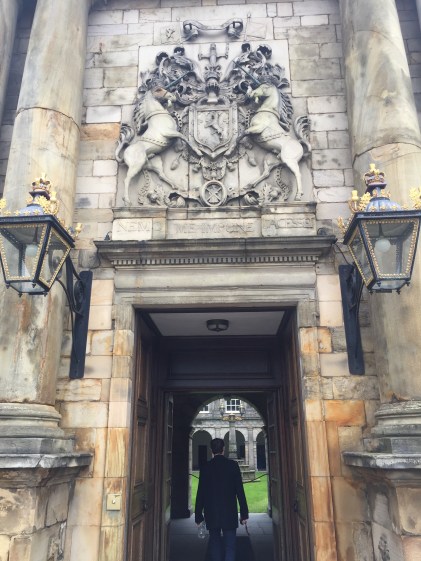
You walk through the main entrance to an inner courtyard.
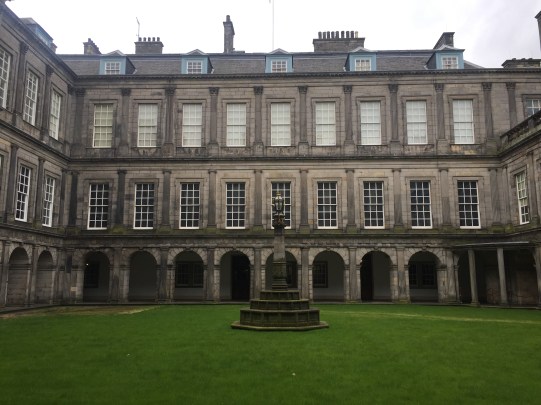
Sadly, you aren’t allowed to take pictures inside the Palace. You get to see the Royal Apartments, ceremonial rooms, and Queen Mary’s historic chambers. For all of those interested in Mary, Queen of Scots, it was amazing. You get to see her bedchamber, outer chamber, and supper room. In her private chambers, she saw her husband, Lord Darnley, murder her secretary, Rizzio. It was the beginning of the end for the tragic Queen. If you don’t know her story, it is definitely an intriguing one.
Mary, Queen of Scots and the Murder of Lord Darnley by Alison Weir and Mary, Queen of Scots by Lady Antonia Fraser are excellent reads if you are interested.
They are ready for the Royal Wedding in the gift shop.


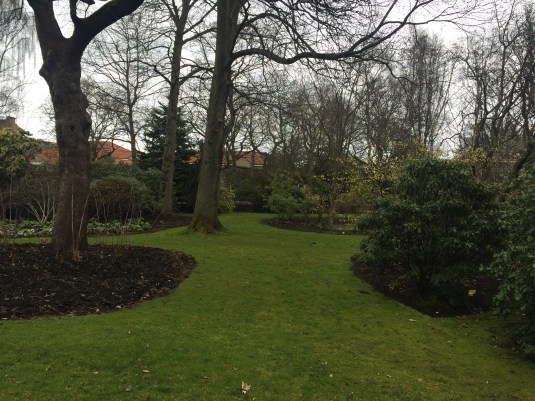
The Palace Gardens
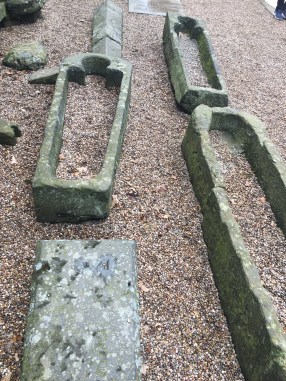
The Ruins of Holyrood Abbey. The Abbey was founded by King David I in 1128. The nave is the only surviving part of what was once a grand Church. It was the site of Royal coronations and funerals. The Abby’s guesthouse was what eventually became the Palace. 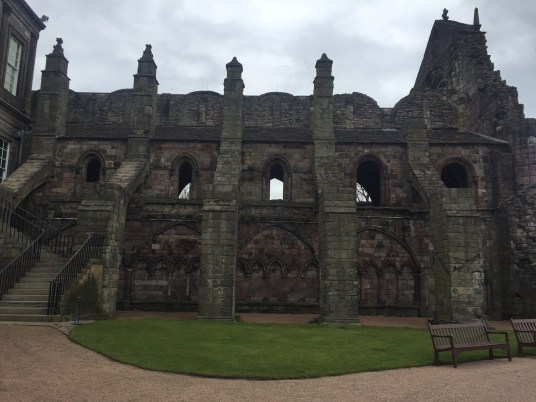


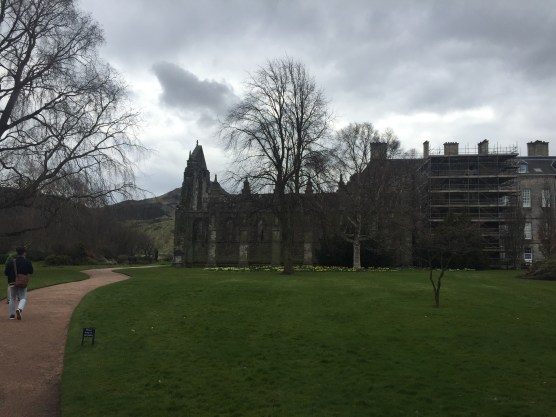
Behind Holyrood Palace is the scenic Arthur’s Seat.
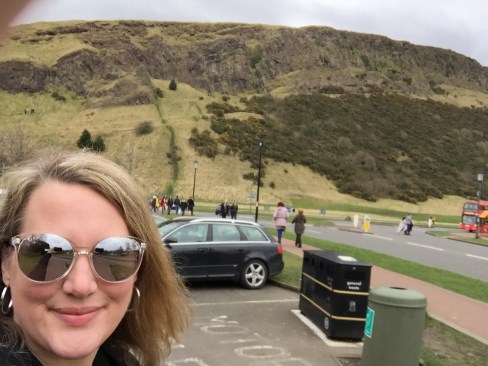
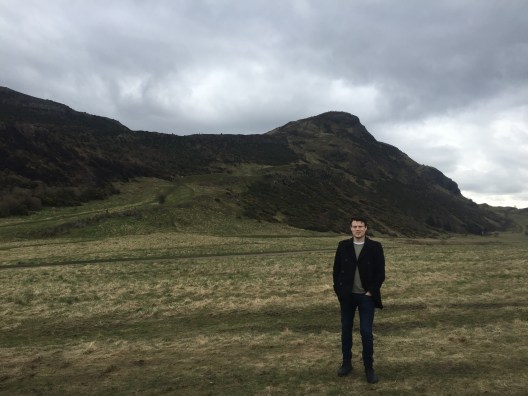
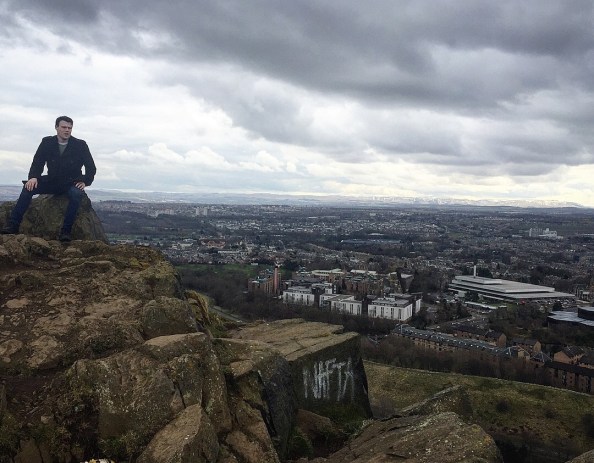
King Arthur’s Seat is part of Holyrood Park, a 640 acre Royal Park that sits beside the Palace. It is an ancient volcano that is 250 m above the city. Andy loves me, so he did not make me climb to the highest peak, just the second highest. Views were amazing, even on a misty day.
Carlton Hill is sits near the city center. It offers a lovely view of the city and houses multiple Scottish monuments. Here are some pictures of a few favorites, I won’t make you suffer through them all.
The Robert Burns Monument. Burns is a well known Scots poet who lived in the late 1700s. He wrote Auld Lang Syne (the song everyone plays at New Year’s.) 
The (unfinished) Acropolis is the “National Monument.” It was started after Napoleon’s defeat at Waterloo, to memorialize the soldiers who had died during the Napoleonic wars. 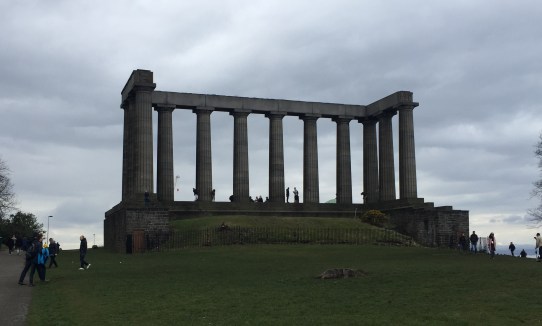


The Old Observatory House. 
The Scottish-American Soldier Monument is in the Old Carlton Cemetery. Built in 1893, it commemorates the Scots who died in America’s Civil War. 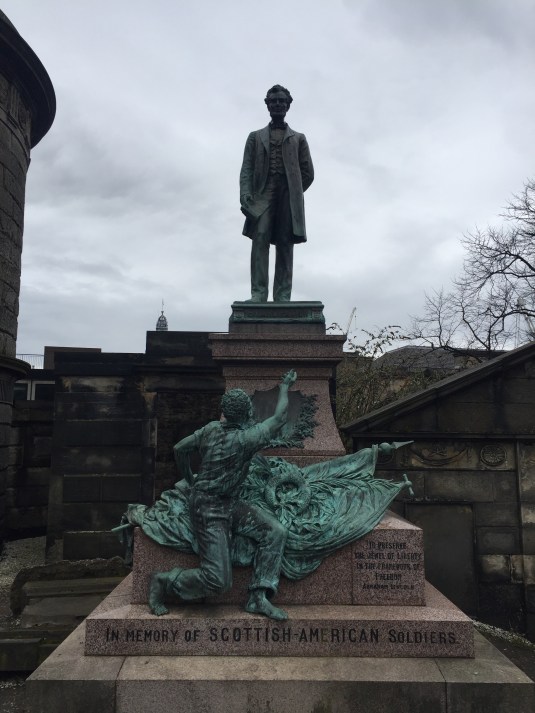
The beautiful Balmoral Hotel on Princess Street. Two fun facts. 1. J.K. Rowling finished writing the last Harry Potter here in 2007. 2. Since 1902 the Hotel has been setting it’s enormous clock three minutes fast, to make sure people don’t miss their train. 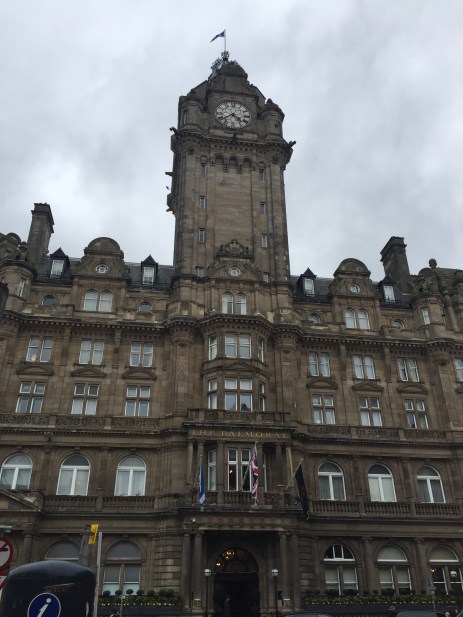
The Gothic Sir Walter Scott monument is 61 meters tall and was erected in 1841 for the author. It is super detailed (pics don’t do it justice), with 64 statues of various historic Scottish figures and Scott’s literary characters throughout. The statue of Scott and his dog sits in the middle. Fun Fact- The train statin nearby is called the Waverley after Scott’s novel.


We walked around the Princes Street Garden, which offered a majestic view of Edinburgh Castle atop the hill. Also, Great Aunt Lizzie’s cute cottage.
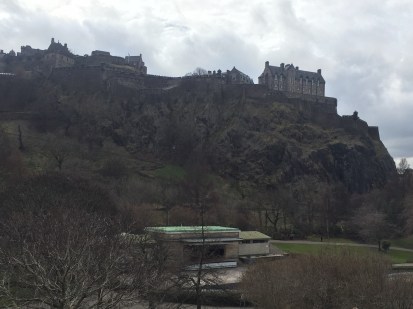


The Scottish National Gallery – just a few favorites. You know I love portraits of lovely ladies. Mary Nesbit, Countess of Elgin (1977-1855) (1804) by Baron Gérard François and The Lady Agnew (1892-3) by John Singer Sargent


The Ladies of Waldegrave (1780) by Sir Joshua Reynolds
All of the food!! And drinks!!


In love with the kilts.


My last Scottish meal (in the airport lounge)- Scone with jam and clotted cream and PG tips tea. Classic.

And I really did love Scotland. It was one of my favorite places I’ve been. The people were so personable, and I absolutely loved the history and feel of the city.
xoxo-sk
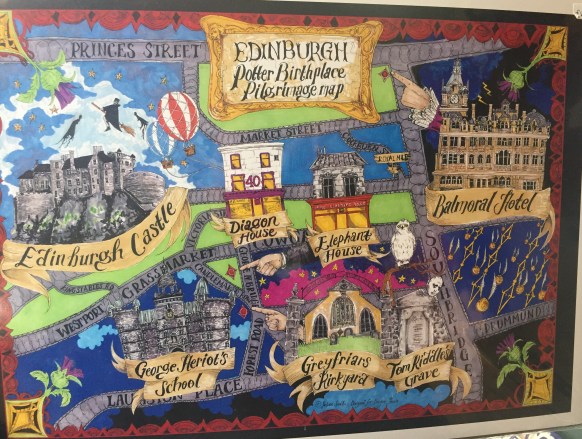
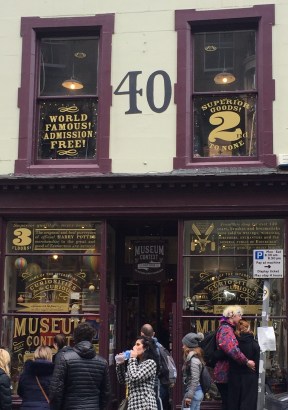
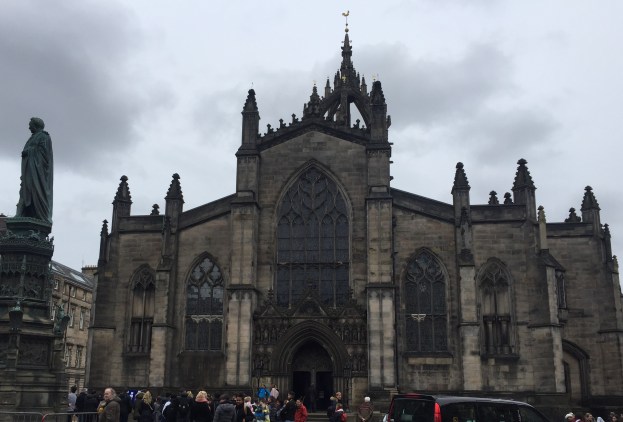
ps. Look what we found-

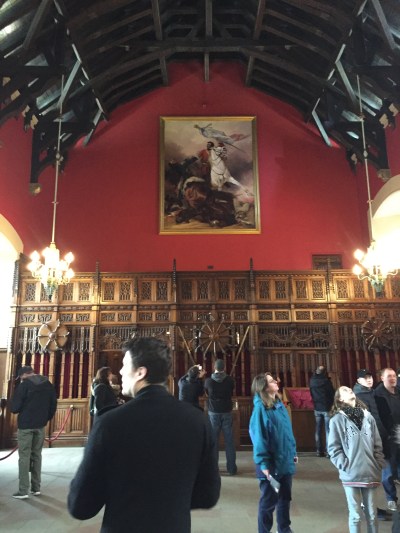
 With additions being made and parts being destroyed over it’s centuries old existence, the Castle’s layout is interesting. It’s a confusing mix of Royal Apartments, Towers, staircases, and military buildings.


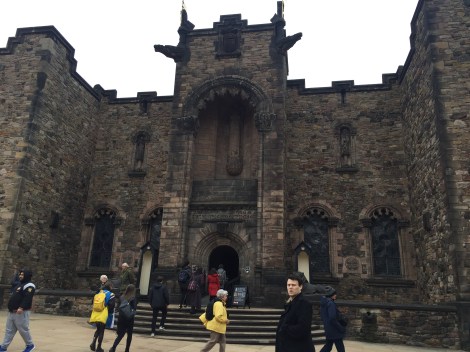




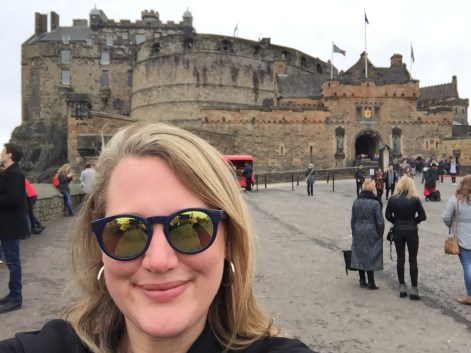 The view from the street. Pretty amazing structure and strategic placement.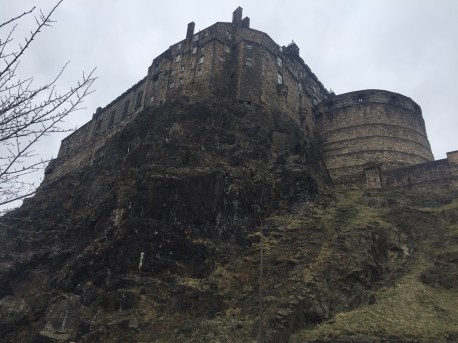








 xoxo-sk