Ciao Rome! We hit the ground running here. First stop- Vatican City (the Museums and Sistine Chapel specifically.) Vatican City is the smallest country in the world (110 acres), with a population under 1000. Ruled by the Holy Catholic Church, it consists of St. Peter’s Basilica, the Vatican Museums, the Sistine Chapel, Vatican Gardens, and various offices and housing for the Pope, clergy, and Swiss Guard.
 Pope Julius II founded the Vatican Museum in the early 16th century. It houses countless works of art, including paintings, tapestries, frescos, maps, and sculptures. There is truly so much interesting art to see, more than we could possible see in one morning, especially with kids. The Museum is enormous. It is not super organized and lacks a flow, but I think we saw everything we wanted to see, and in the kid’s case more than they wanted. Here are some (lots) of the pictures, I tried my best to edit them down to my favorites.
The Pinecone Courtyard or Pigna. The 13 foot bronze Pinecone was found in Rome, near the Pantheon and is from 1st century BC. It has been moved a few times, but has been in its current location since 1608. The bronze sphere within a sphere is one of many similar sculptures around the world by Italian Pomodoro. It was added in latter part of the 20th century, with the inner sphere meant to symbolize the world and the outer Christianity.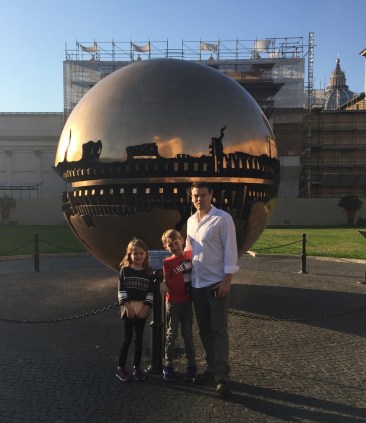
 In the New Wing/ Braccio Nuevo. Andrew with the Statue of the Nile God.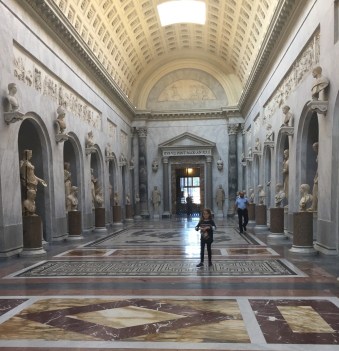
 Staring down a Roman marble bust of Medusa from 2nd century.
Many (most) of the statue’s penises are covered with a fig leaf. Pope Paul IV began the trend in the late 1500s, and it continued into the 1800’s. Some Popes broke the penises off, while some preferred the addition of the fig leaf. Sadly, Pope Pius IX destroyed any statues with their penis still visible.  Roman Emperor Antoninus Pius from the 2nd Century AD.

 Katherine sitting by the pond in the Octagonal Courtyard, originally called the Belvedere Courtyard. The Courtyard holds some of the Vatican’s most important statues.
 Laocoön and His Sons was made around 30 BC and found outside Rome in 1506. The sculpture shows the mythological Trojan priest Laocoön and his sons getting attacked by serpents sent by the gods.
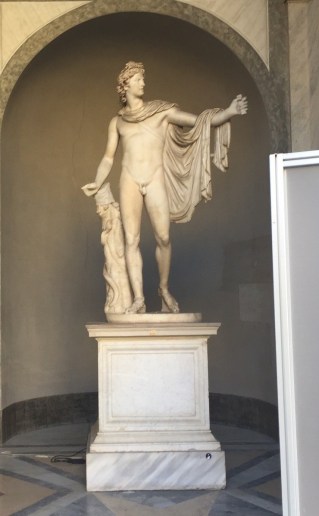 One of the Vatican’s most famous sculptures, Apollo Belvedere. It depicts the Greek/Roman god Apollo having just shot his arrow. This marble Greek statue, from 1st century BC, was found in the 15th century and was the first piece of art in the Vatican’s art collection. Interestingly, this was one of the pieces Napoleon brought back to the Louvre in Paris after his Italian invasion. Obviously, it was returned in 1815.
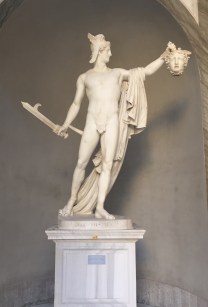 Perseus Triumphant was carved in 1801 by Canova and shows Perseus holding Medusa’s severed head. This piece was inspired by the Apollo Belvedere and took its place when Napoleon took Apollo back to Paris.
  To the left and right of Andy, Katherine, and Perseus are the boxers, Creugas of Durres and Damoxenos of Syracuse. Canova, inspired by the story Periegesis of Greece, finished sculpting the pair in the very early 1800s.
 Venus and Eros from 170.
Sarcophagus with Bacchanalian procession and lion’s heads.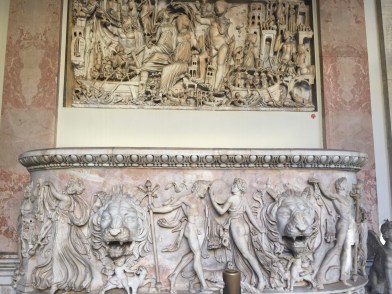
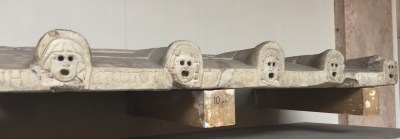
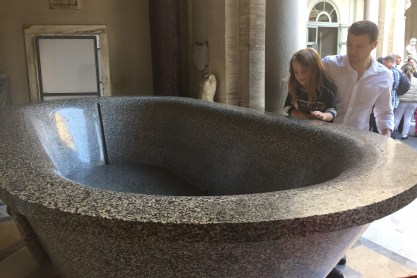 The tub was made out of a single piece of red granite.
Quick stop in the Egyptian area. Andrew with huge red granite statue of Ptolemy Philadelphus.
The Sala Rotonda/Rotunda Room, completed in 1779.
Found in Emperor Hadrian’s old villa and restored in 1774, these Roman marble sculptures represent Zeus’s daughters, the Muses. The Muse of Tragedy, Melpomene, with a tragic mask. Clio, the Muse of History and Memory. Urania, Muse of astronomy, with her staff and globe. The Muse of Comedy, Thalia, with her comic mask. The statues are 2nd century Roman copies of Greek originals from the 4th century BC.
Hercules is on the on the far right and is gilded bronze from the 2nd century. He was found buried under a courtyard in the Roman district of Parione in 1864. It was found that the statue had been struck by lightening, and then, according to Roman customs, given a ritual burial.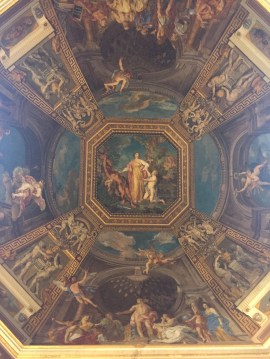 The beautiful ceilings and floors. The stunning mosaics are from the early 3rd century and were reassembled in the hall in the 18th century.
At the center of the Rotunda Room is Nero’s spherical stone bath. He ordered it for his Domus Aura (Golden House) in the early 1st century. With a forty foot diameter, the basin is made of porphyry, volcanic rock. It is hard and heavy, and it must have been quite a feat to get the rock from Egypt to Rome and carve into shape.  A red porphyry scarophagus from the 4th century that belonged to Constantine’s mother, Saint Helen.
The Gallery of Tapestries is full of Flemish tapestries made in Brussels by Pieter Van Aelst’s school. These tapestries took years to make. They used Raphael’s students drawings as inspiration. The hangings were originally displayed in the Sistine Chapel in 1531. There are also some 17th century Roman made ones of Pope Urban VIII’s life on display. Tapestries aren’t a favorite of mine, but they were beautifully detailed. The Resurrection of the Christ. 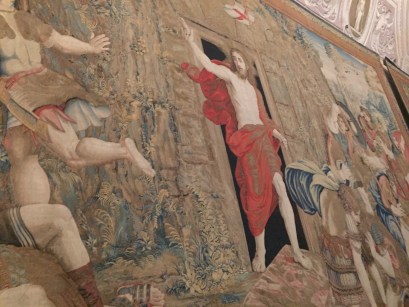
 The Gallery’s ceiling. My favorite thing about the Museum were the amazingly beautiful ceilings, each one more gorgeous then the next. Yep, all that art and I am in obsessed with the ceilings.
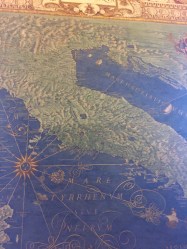
The Maps Gallery. Between 1580 and 1585 the famous geographer, Ignazio Danti, frescoed forty maps on the walls representing Italian and Papal regions. I loved the rich bright blues on the maps and the ceilings were stunning.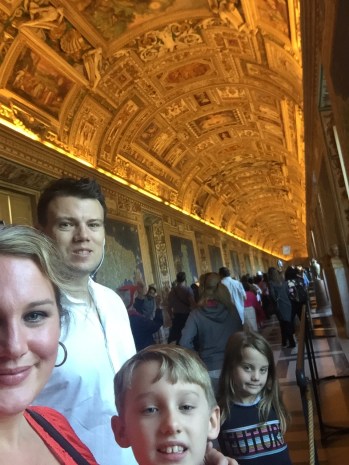

The Raphael Rooms were used as Papal apartments from 1507 to 1585. They were painted by Raphael and his school between 1508 and 1524.
The Room of the Segnatura ceiling. 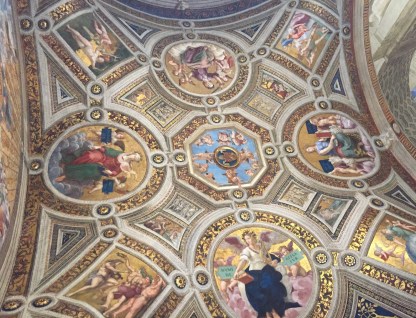
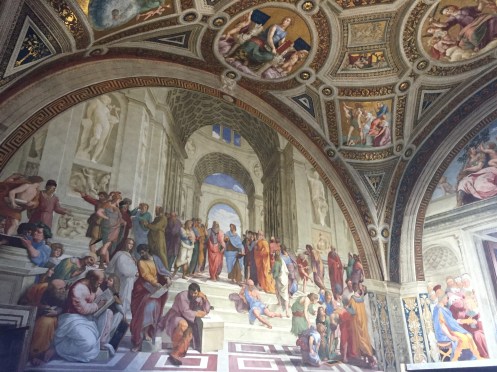 The School of Athens. In this painting, Raphael has imagined a meeting of the greatest minds in history. You can find Michelangelo, Plato, Socrates, Aristotle, and Bramante in the piece, along with Raphael in the bottom right corner.
 Disputation of the Holy Sacrament.
The Room of Heliodorus ceiling.
 The Mass at Bolsena. Raphael painted himself into this painting.
The Room of the Fire in the Borgo ceiling.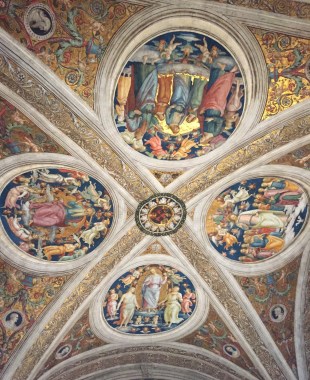
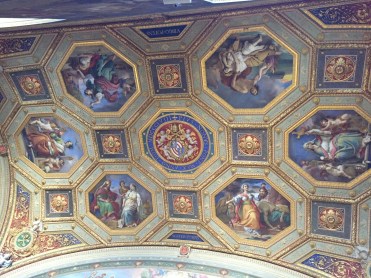
You are not allowed to take pictures inside the Vatican’s most famous site, The Sistine Chapel. It was built in the 15th century. Most people are pretty familiar with it and a quick google search will show you pictures of the interior. Michelangelo’s famous ceiling truly is magnificent. It contains nine scenes from the book of Genesis, with the most famous being the Creation of Adam. It took him (mostly alone, he did not play well with others) four years to paint (1508-1512.) Although the ceiling is lovely, I found myself drawn more towards Michelangelo’s The Last Judgement, painted between 1535 and 1541. It’s a chaotic painting of the second coming of Jesus for the final judgement of man.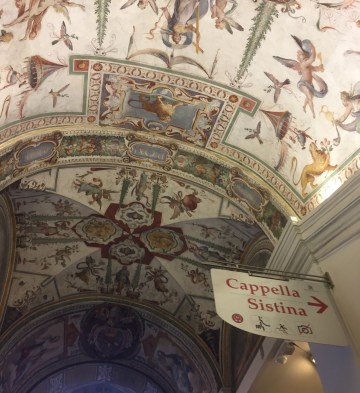
Collection of Contemporary Art.
El Precursor by Sartorio finsihsned in 1928. Foujita’s Madonna and Child (1920.)
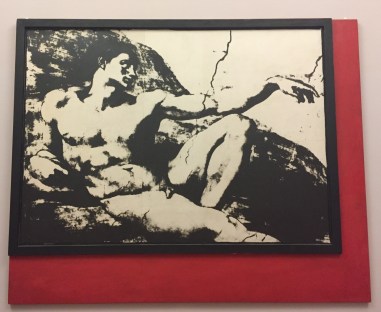 Tano Festa’s piece from 1979 was inspired by Michelangelo’s work in the Sistine Chapel

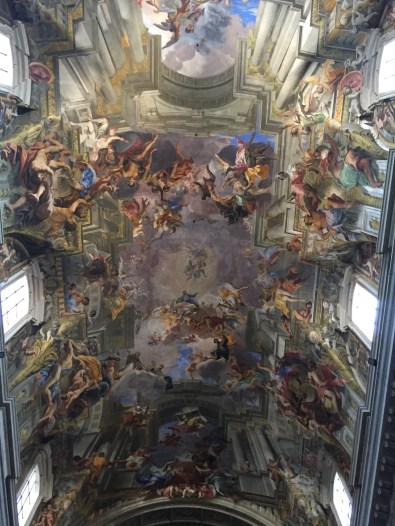
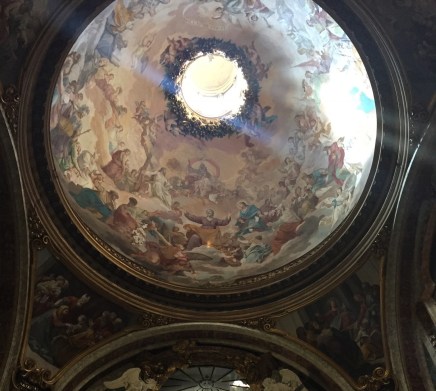
A few more amazing ceilings and yes Katherine, we are almost done.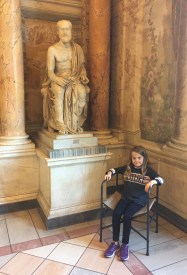
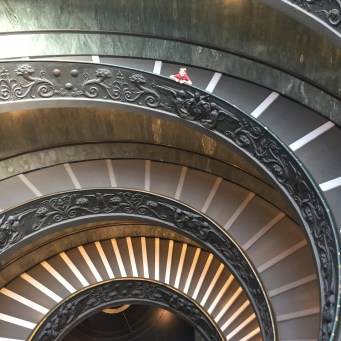 Andrew and the amazing spiral staircase. You are unable to see the original Bramante spiral staircase, but this one is very similar and was constructed in 1932. It a double helix design, made up of two staircases.
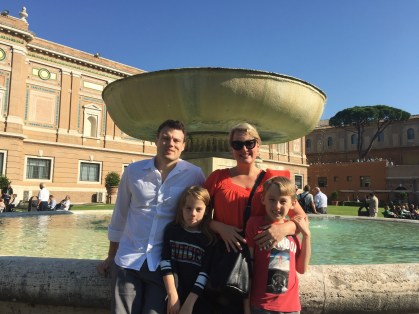 Goodbye Vatican, you were everything everyone said you would be- gorgeously breathtaking and crazy crowded.
But wait, one last stop at the Vatican Post Office to send a postcard to our cousins.
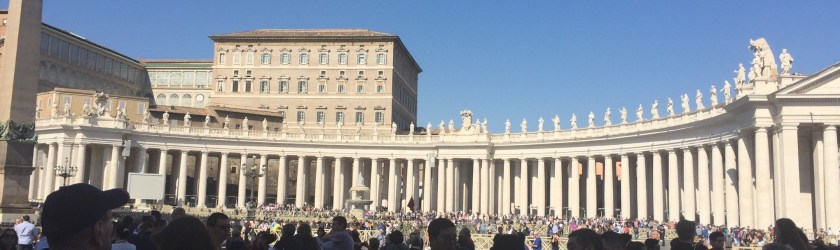
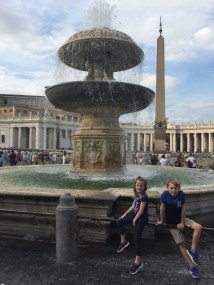
Making our way out of St. Peter’s Square. The square was designed by the famous architect Bernini. 140 columns surround the square, with 140 statues atop each one. The colonnades are to represent the Catholic Church embracing the people of the world. It is beautiful.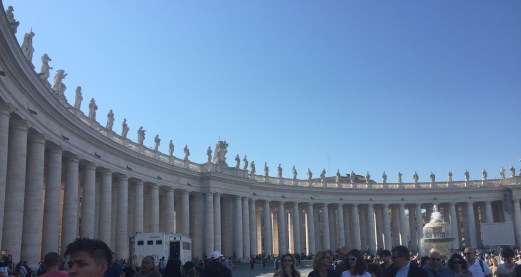
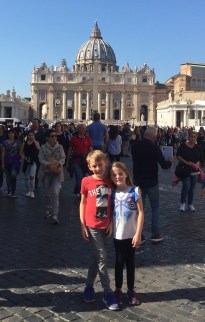
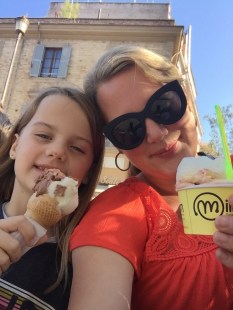 Promised snack break. Gelato flavors today are Strawberries and Cream/White Melon (white melon was the best flavor the whole trip) for me and Cookies/ Nutella for Katherine. Andy doing the espresso thing after a packed morning.
xoxo-sk








 Kids school pics this year.








 She brought goodies. I try and make the American food last, but it’s gone within the week.




 It’s always sad when someone has to go, but we had so much fun.


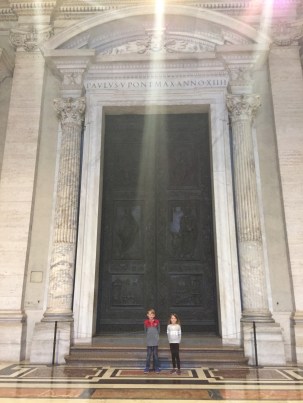


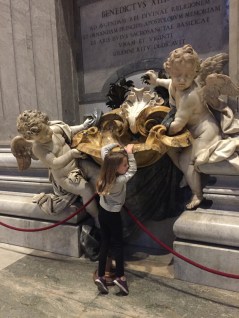


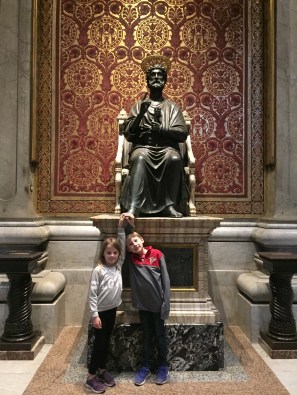


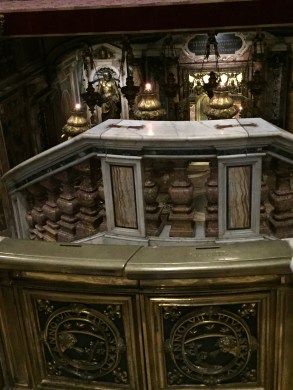

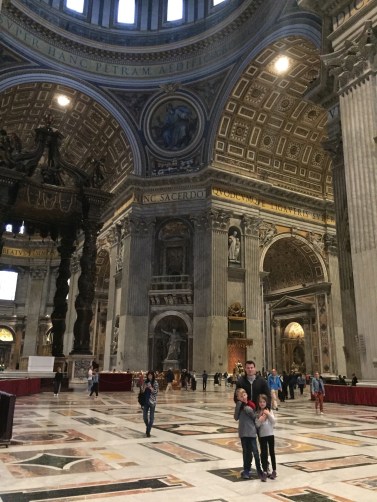


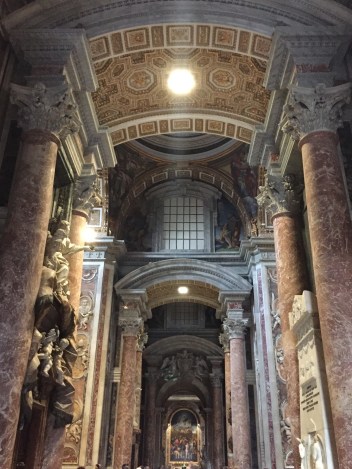


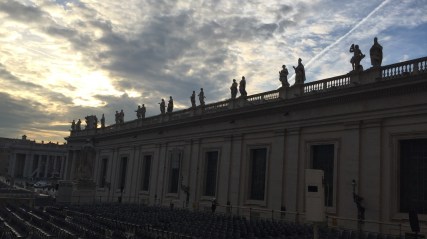
 Looking out into the Square from the Basilica.


 Also, I haven’t mentioned the police presence in Rome. It is everywhere, and they don’t play.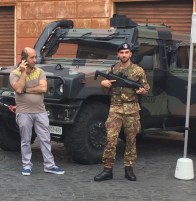


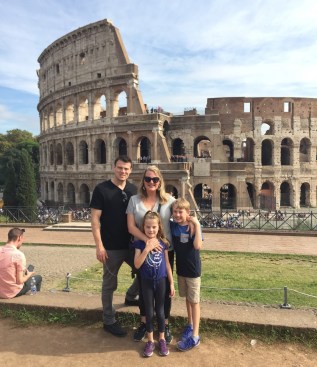
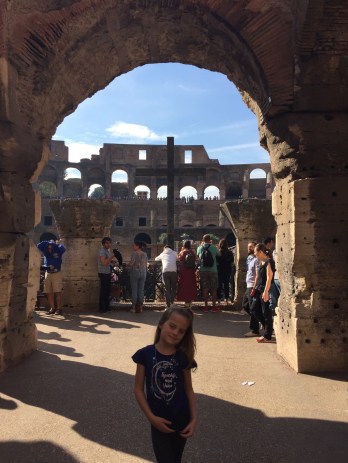


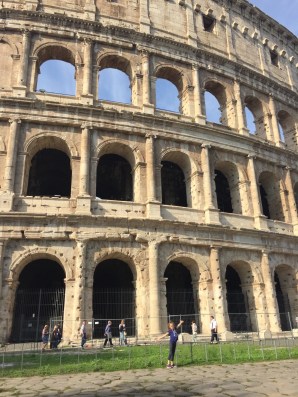
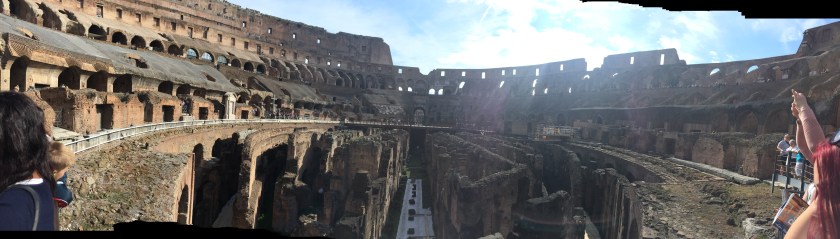 The original floor was made of wood and covered with sand. The hypogeum (hidden passageways) were underneath and connected to points outside the arena. The hypogeum had two levels and was full of corridors, cages, pulleys, and elevators to give the animals and gladiators access to the stage above.

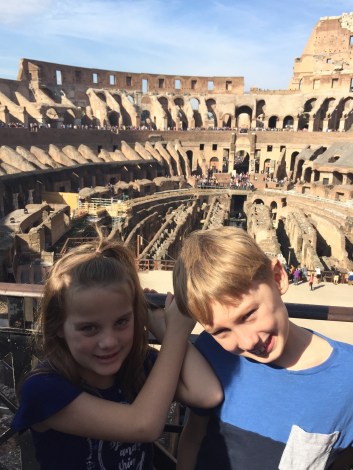
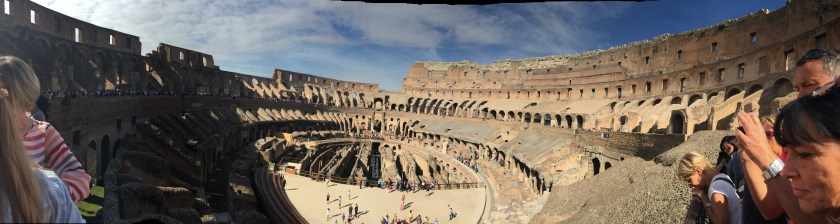
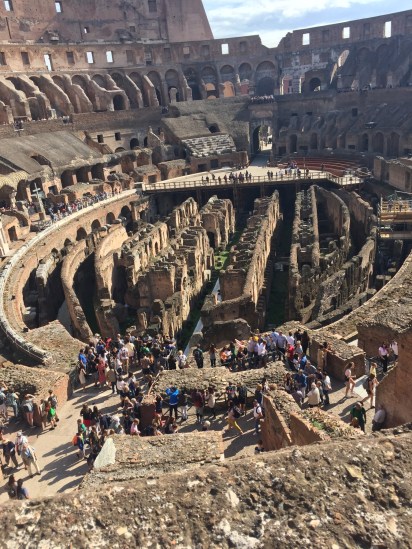 As you can see, there were defiantly a lot of people there (your tickets come with a certain time slot), but it wasn’t bad. We saw everything we wanted to see. Sometimes you may have to wait a minute or so to get a prime viewing spot.


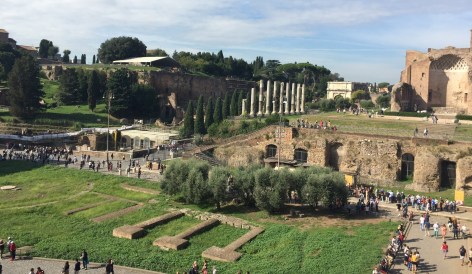


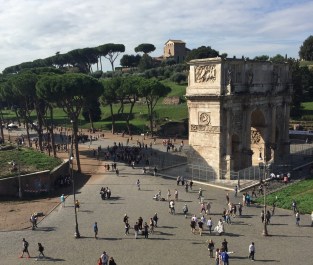 Arch of Constantine erected in 312. It lies between the Colosseum and Palatine Hill. (Picture is from the top of the Colosseum.)


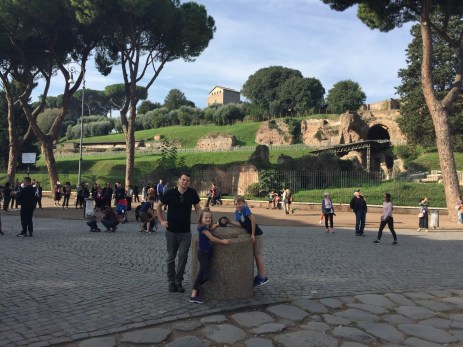
 About to go up the hill. Legend has it that the hill was home to Romulus (the founder of Rome) and Remus.
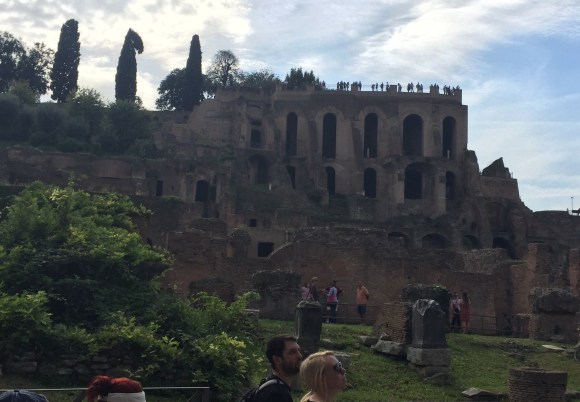
  The ruins of the Emperor’s great houses. Kids were unimpressed, but Andy and I loved it.
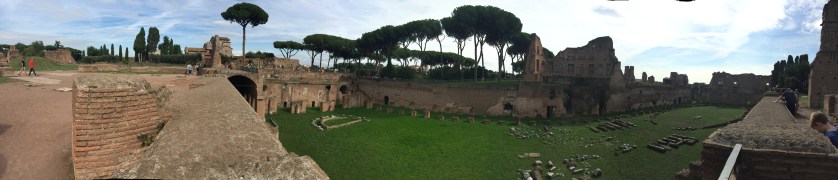
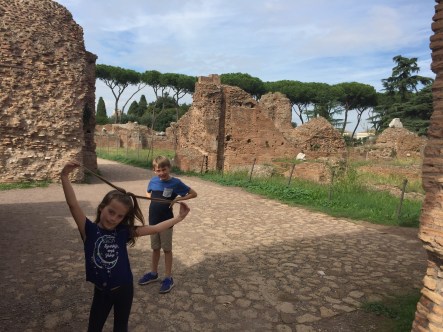 Palace of Domitian garden/stadium.
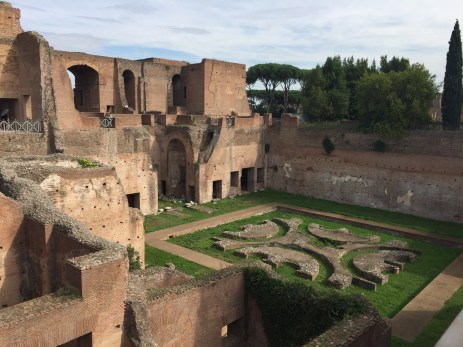
 Water garden courtyard of the Domus Augustana.
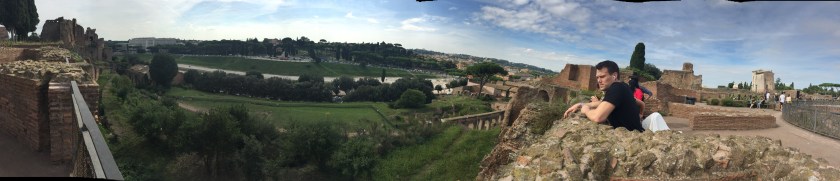
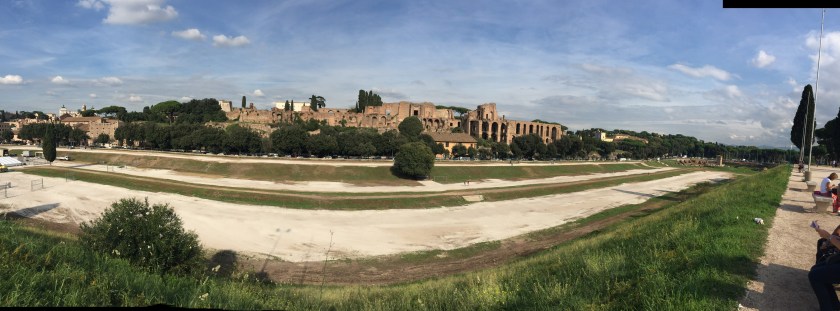
 Overlooking Circus Maximus.
 I think the Forum was Andy’s favorite place we visited here. He took Latin in high school and came here on a school trip.
 The Nymphaeum of the Mirrors, a niche built into the ancient walls as you make your way down the hill.
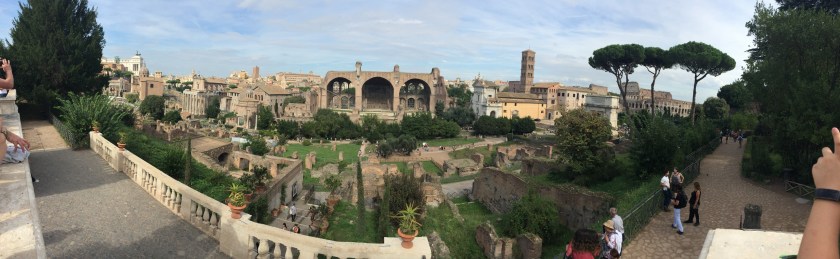
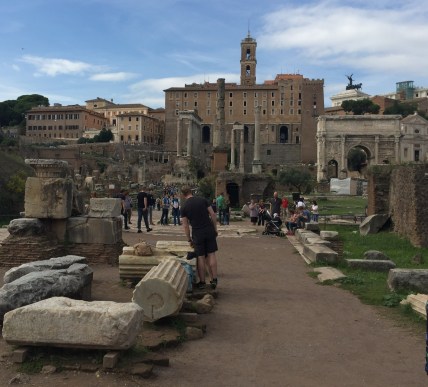
 Halfway up the hill, overlooking the Forum below. As early as the 7th century BC, the Forum was where all the action happened in Rome. It was the political, commercial, and religious center of Rome. It has been added onto and rebuilt over time; most of what we see now is from around the 1st century BC.
 The Forum’s largest building was the Basilica of Maxentius and Constantine, built in 312 AD.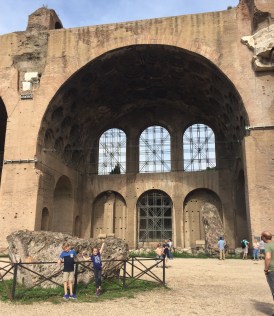


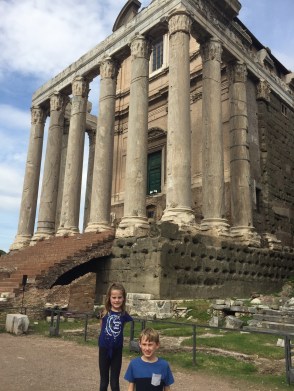
 Juturna Springs. It was said these waters had healing properties.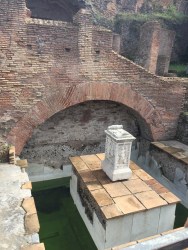
 The House of the Vestal Virgins was where the women lived to serve out their thirty year term of service. After they left their position of honor they were free to marry.


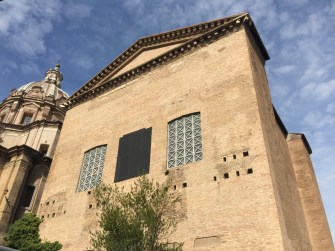


 The Mouth of Truth/Bocca della Verità has been located at the Santa Maria de Cosmedin Church since 1632. It is a marble mask of the sea God Oceanus. Legend has it that if you put your hand in the mouth and tell a lie, he will bite your hand off. There was a long line to put your hand in so we just grabbed a picture and moved on. Kids were done, I don’t blame them. A lot was seen today.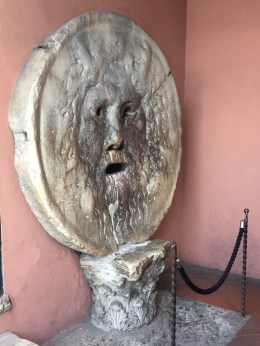



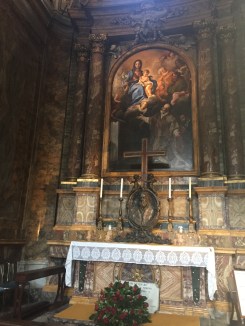


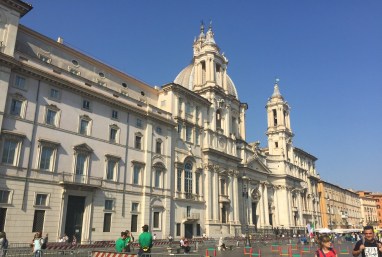
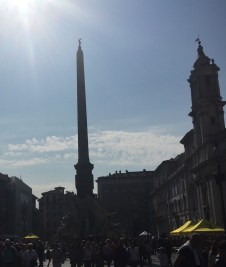
 The Church of Sant’Agnese in Agone.
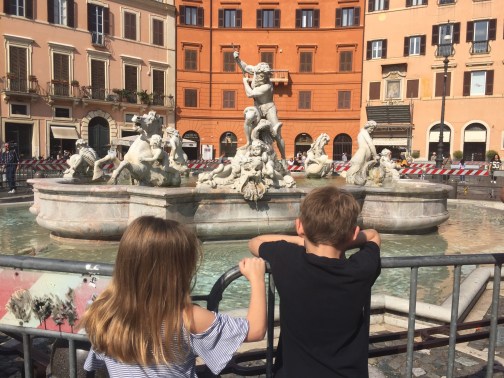
 Porta’s The Fountain of the Moor from 1576.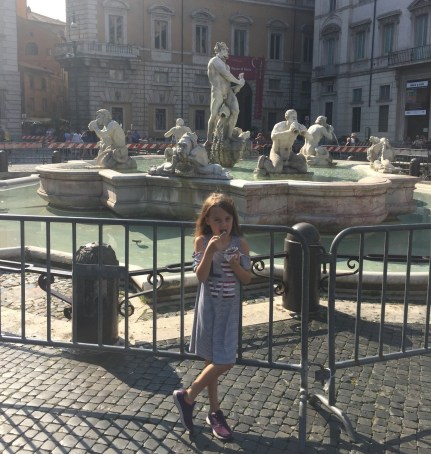




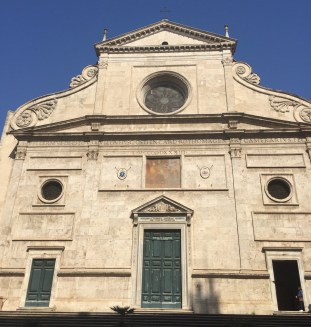

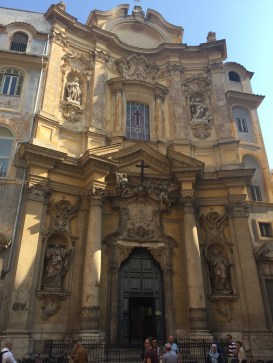

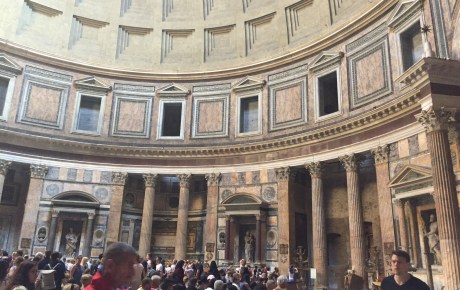
 The Pantheon’s 27 foot wide oculus.
  Since there is a massive hole in the ceiling, when it rains, water falls inside. The floor is slightly slanted and designed with small holes to allow water to drain.

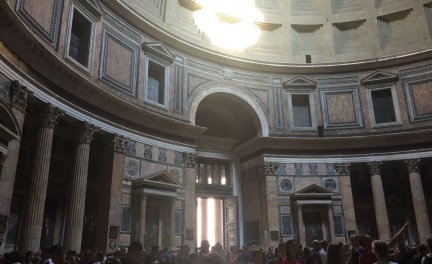
 There are 16 Egyptian granite Corinthian columns at the front, each standing 40 feet tall and weighing 60 tons.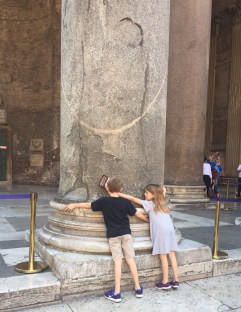







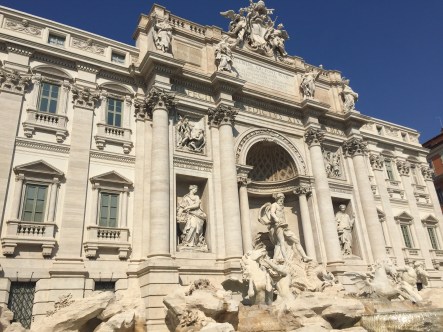 It is super crowded at the Trevi Fountain, so good pictures are hard to come by. In the center of the Fountain is Neptune, God of the Sea, being pulled in a chariot by tritons and horses.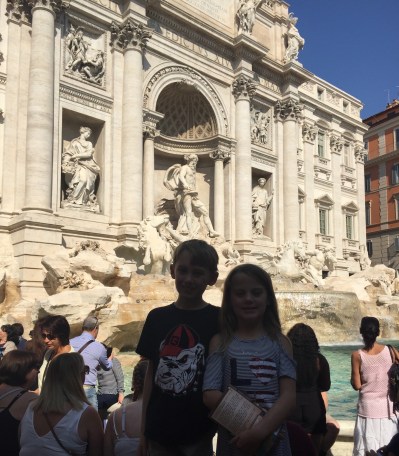


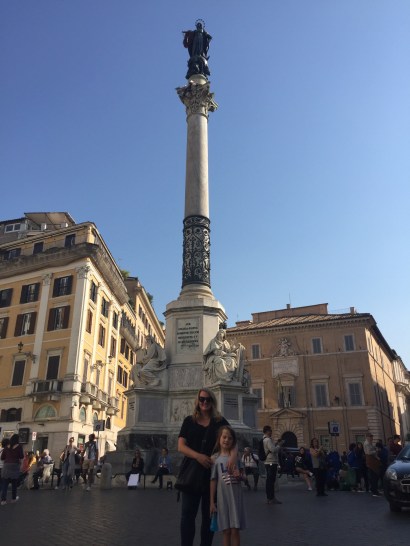
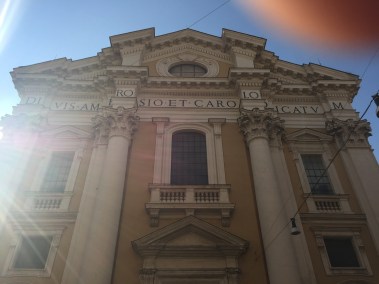

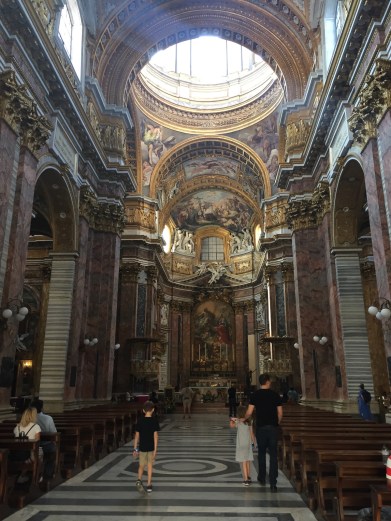
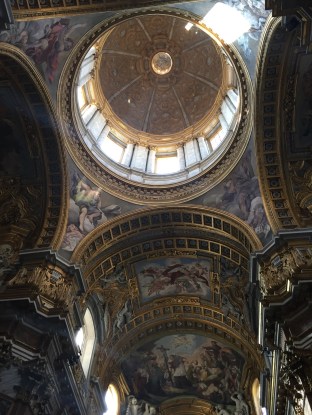


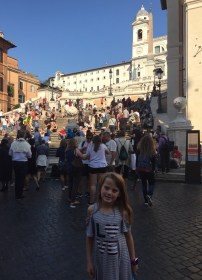
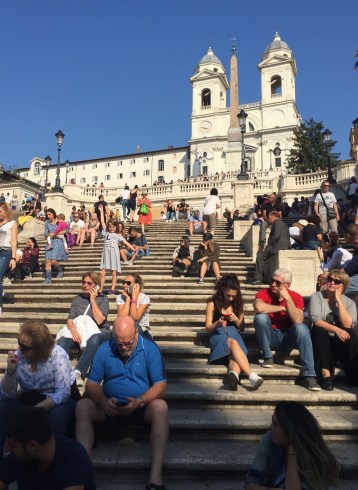 At the top of the 135 Spanish Steps is Trinità Dei Monti. Ironically, it is a French Roman Catholic Church, and the steps were originally built in 1723-25 by the French as a grand entrance to their church.
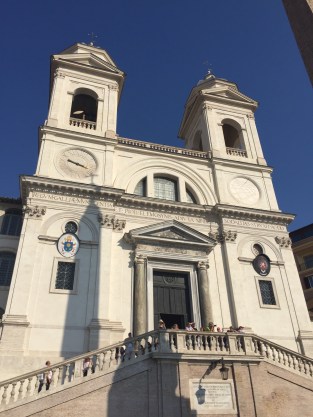 At the base of the Steps is Bernini’s The Fountain of the Old Boat. In 1598 the Tiber River flooded, and people had to use boats to get around the city. When the waters finally recided, one lone boat was left in this plaza, and Bernini and his son memorialized it with this fountain.

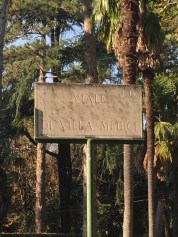
 Andrew at the Pincio’s Water Clock. The hydrochromometer was placed in the Gardens in 1873.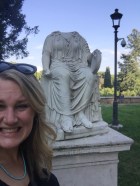


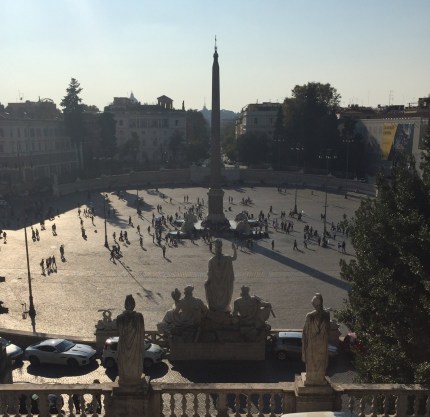
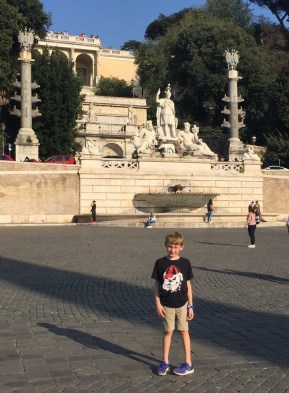 The Piazza del Popolo’s Fontana del Nettuno.
 At the center of the Piazza is an Egyptian obelisk from Ramesses II. It was brought to Rome in 10 BC by Emperor Augustus. It was originally erected in Circus Maximus, but moved to Piazza del Popolo in 1589.






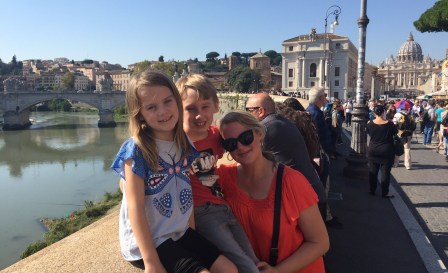 After leaving Vatican City and St. Peter’s Square, we made our way down the road to Castel Sant’Angelo, Castle of the Holy Angel, named after the angel Michael. Legend has it the plague killed hundreds of thousands of people in the 500s, and in 590, Michael landed on top of the Castle, and the plague ended. Originally built in early 100s by Emperor Hadrian as a mausoleum for himself and family, it has been used as a fortress, castle, prison, and now museum.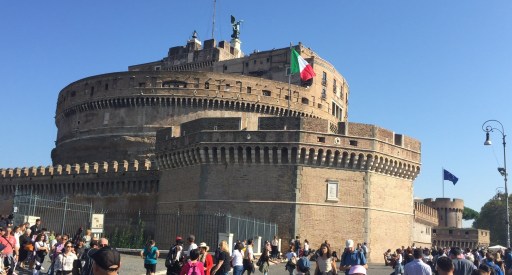


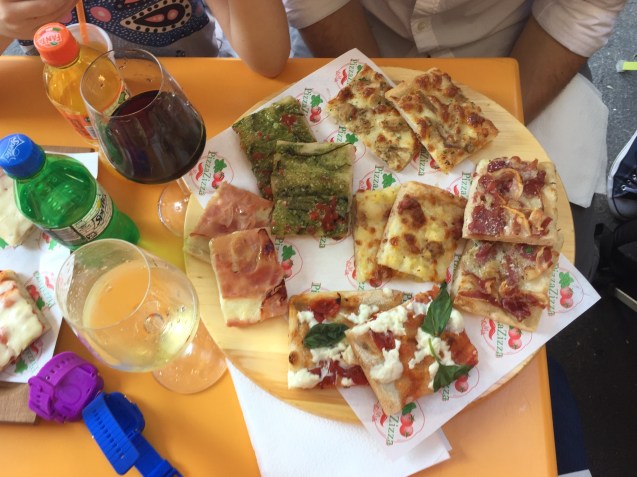
 Andy and I enjoyed their specialty, the pizza platter. It was a sampling of six of their pizzas, each one amazing. The mushroom and fresh basil and mozzarella were my favorites, Andy loved the pesto and ham.
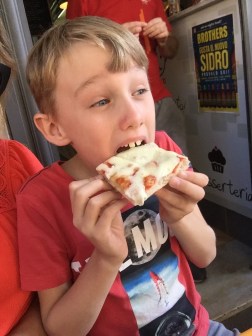
 The kids loved their margarita pizza. If you didn’t know, the toppings on a margarita (margherita) pizza represent the colors of the Italian flag- red/tomatoes, white/mozzarella, green/basil. It was created in 1880 to honor Margherita, the Italian Queen. When Andrew finished his, they just brought him more. I cannot tell you how wonderful the hospitality is at this restaurant.
 And like a true Italian, Andy finished his meal with another expresso.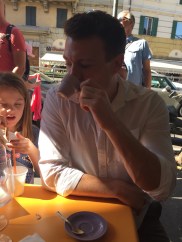
 At the start of the climb.

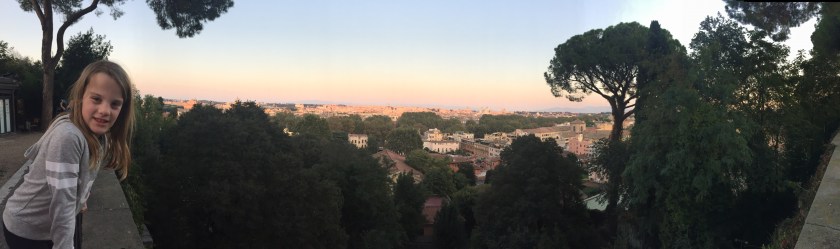


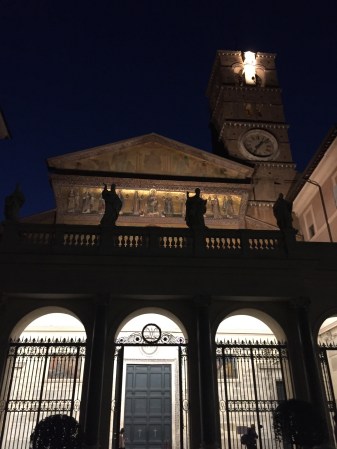

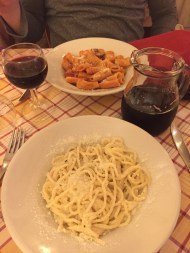
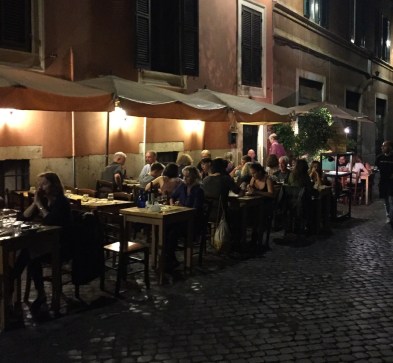 Dinner outside at Sette Oche. My favorite of the nicer restaurants we went to (we didn’t go to any super nice places due to it being an absolute waste on our kids at this point.) I had cacio e pepe, a new favorite I repeated through the trip, and a caprese salad (no before pics, I was hungry.) Andy had lemon linguine, Katherine meatballs, and Andrew (again) had a margarita pizza.


 Goodnight Rome.


 xoxo-sk