My favorite place we went was Hampton Court. It played such an important part of the my favorite time, the Tudor reign. Hampton Court Palace is about 15 miles SW of London, an hour train ride for us. Originally owned by Cardinal Wolsey, it was given (as a last ditch effort to save his place in court) to King Henry VIII who enlarged the Palace to use it as a main residence. It was his favorite and one of only two of his remaining residences. (St. James Palace being the other.) King George II was the last monarch to live there. In 1838 it was open to the pubic. For visitation, they have recreated some of the time periods where it was used the most, one being the older Tudor court and another, the newer baroque part built for William III and Mary II. There is also a piece about the Hanoverians court. 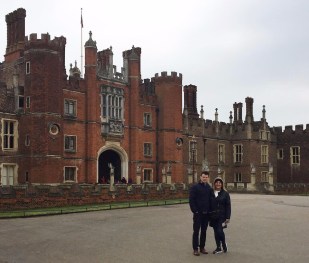
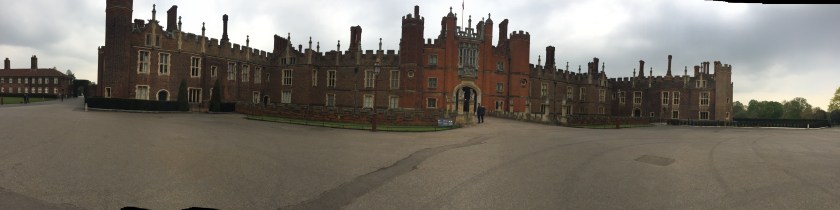 You walk in through the Main Gate into Base Court. It was the arrival area in the Tudor day. As many as 1,000 courtiers and their servants would stay at the Palace.


If you continue walking you reach the Clock Court. The fifteen foot astronomical clock was placed there in 1540 and it still works.


We first explored the Hampton Court of King Henry’s time, 1529-1547. 


The original Grand Hall remains. He built this Hall with Anne Boleyn, and they decorated it with interlocking Hs and As. When she was beheaded and the King remarried, he got rid of all reminders of her. One HA they missed is all that remains.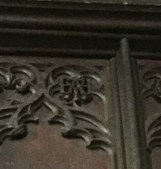 Hundreds ate in the Grand Hall twice a day. It also served as a place for court entertainment. Shakespeare performed plays here once upon a time. King Andy and Queen Susanne are ready to be entertained.
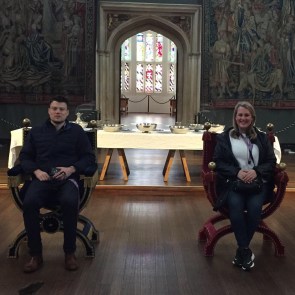 The Great Watching Room, a little closer to the King’s private apartments, only the elite were allowed in. I love the ceiling.


The Processional Gallery is rumored to be haunted by the ghost of Henry’s fifth wife Catherine Howard. She found out she was being charged with adultery and ran down this hall to try and reach the King to plead her case. Guards reached her before she could get to the door. Three months later, she was found guilty and executed (just like her cousin Anne Boleyn.)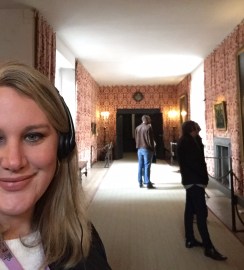 The Privy Closet where Henry married Katherine Parr, his last wife who managed to outlive him.


 The Master Carpenter’s Court is where tradesmen and merchants delivered goods for King Henry’s Court. His kitchen’s were massive with a staff of 200 and 45 rooms strong.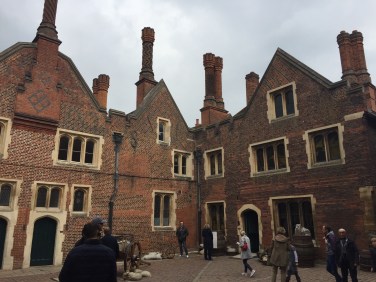


Moving on from the Tudor dynasty.


The Presence Room and the Public Dining Room where King George ate publicly two time a week (1717/18.) The napkins are folded super fancy. Below are replicas of Georgian dress at the time.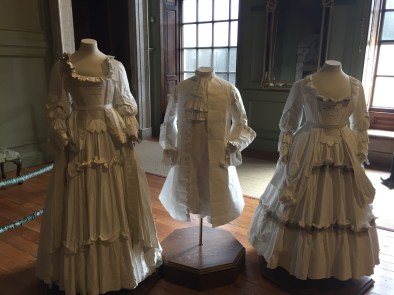


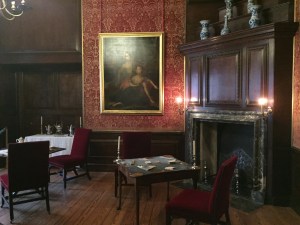 The Queen’s Private Apartments where she could casually eat and play games with her ladies and friends. Her Private Bedchamber with its massive canopy is below.


Off to the side of the bedchamber was the Private Dressing Room aka bathroom. Loved the vanity.


And lastly, the Family Dining Room. It looks relatively modern.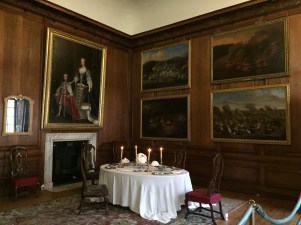 The Fountain Court. The rooms around it were kitchens and food prep areas.
 Another highlight was The Chocolate Room. Thomas Tosier was the chocolate maker for both King George I and II. Chocolate was quite the luxury back then.
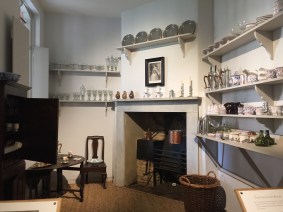 Just making my way up to William and Mary’s State Apartments.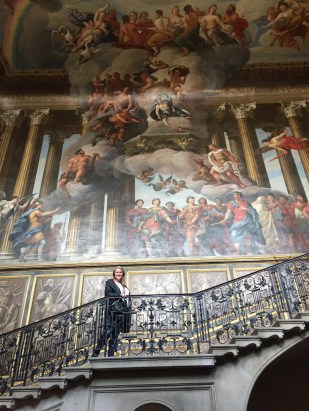


The Guard Chamber where you came before you were allowed into the Presence Chamber.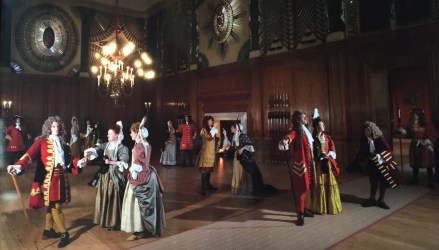 The Presence Chamber is the official throne room. One had to bow or curtsey as they passed, even if the King wasn’t there.
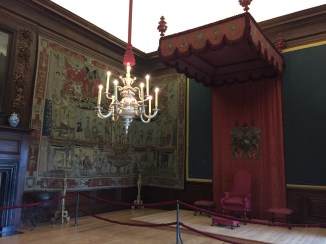 The Privy Chamber’s windows give you a beautiful view of the the Privy Garden.


The King’s Great Bedchamber is where the king dressed in public. He actually slept in the more practical small bedchamber beside it. The ceiling was painted by Verrio and depicted the mythological story of Diana.


And lastly, the King’s Closet (office) and Stoolroom (toilet.)


The Privy Garden Terrace that overlooked the Privy Gardens and was used somewhat as a greenhouse.


The Chapel Royal was absolutely beautiful. No pictures allowed though.


The Chapel Court Garden outside the Chapel. The Great Fountain Garden was built by William and Mary. It used to have thirteen large fountains, only one is left.
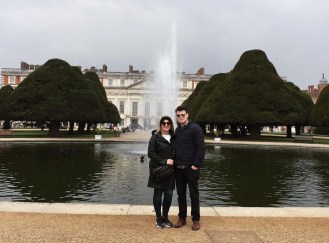 I loved the shape of the yew trees.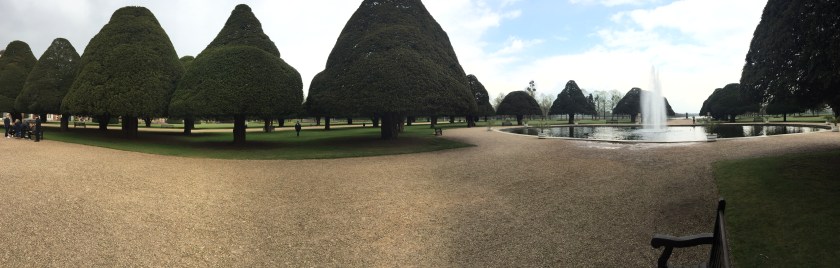
 The Privy Garden has been around since 1533.


The sunken Pond Gardens were originally actual ponds in Henry VIII’s time, they held the fish that was to be eaten at court. Queen Mary II had them emptied and planted with beautiful flowers.


Us starting the maze, Andy is confident; Andy gets overconfident and hits a dead end; we did it.


xoxo-sk


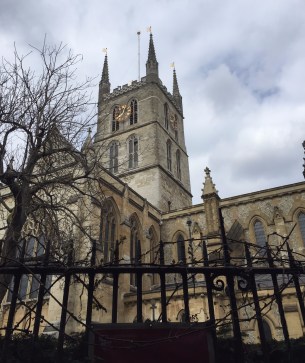


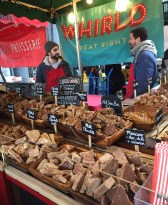
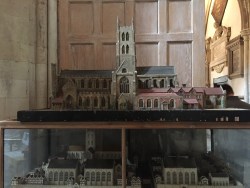 Right beside the Cathedral is the Borough Market. Loved it. If it was closer to our hotel, I would’ve gone back everyday to try something new.

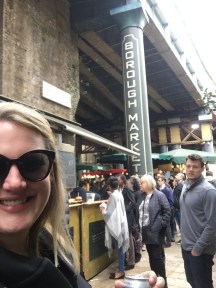 This Southern girl obviously got the BBQ and Mac n cheese, Andy had fish n chips, and then we shared a piece of fudge.




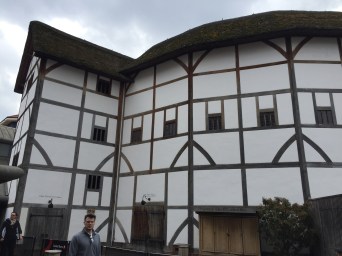 After our foray down to the Southside of the Thames, we crossed back North on the Millennium Bridge. It’s new and jazzy looking, and it was built in (you guessed it) 2000.
 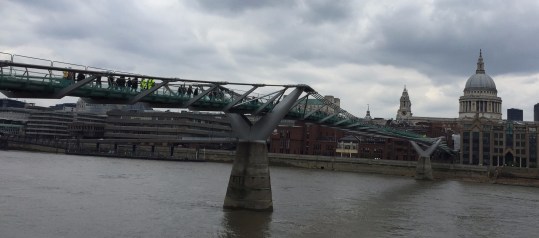 On the other side of the Bridge is another Cathedral. This one is the fancy St. Paul’s Cathedral. Prince Charles and Princess Dianna were married here in 1981. The original Cathedral dates back to 604. The current building was consecrated in 1697.


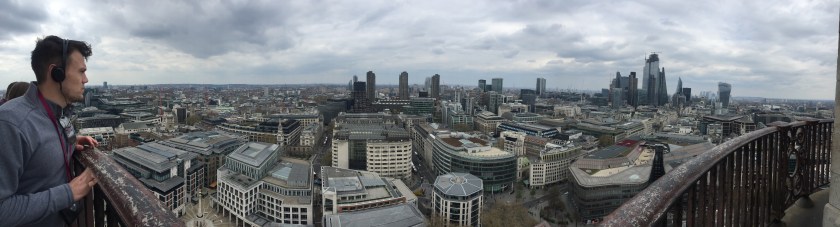 Some other lovely Churches we passed on our way back.







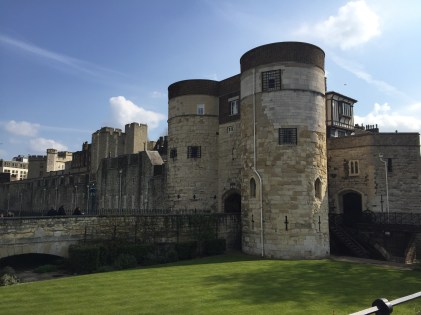
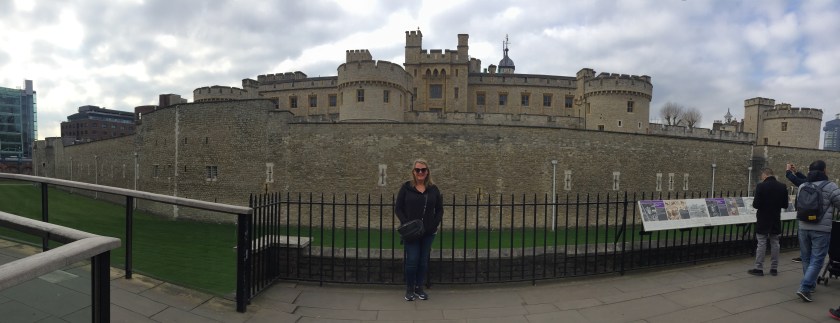 The Tower has been part fortress/royal residence/prison during different times in its history. It is comprised of various buildings (built over centuries) set within defensive walls and a moat. There are twenty-one towers in the Tower of London.
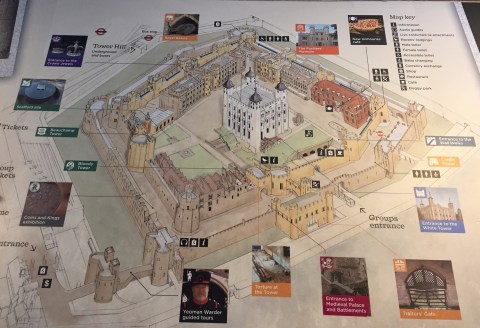
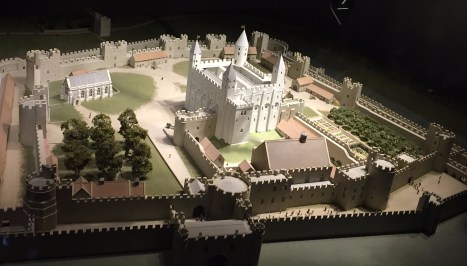 The Southeast corner of the Tower, the Cradle Tower (early 1300s) and the Well Tower (late 1200s.)

 In the middle of the Tower is the central White Tower. Building began by William the Conquerer in 1066 on the keep. It was built as a military stronghold and a royal residence. Over the centuries it’s held many a king (or a deposed king/queen) prisoner. It was whitewashed in 1240 by Henry III.
  The Royal Armories are on display inside- Teenage King Edward’s armor and his father’s, King Henry VIII’a armor. Note the cod piece.

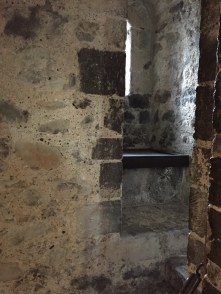
 Always love a good bathroom- A Norman Garderobe.
 St. John’s Chapel.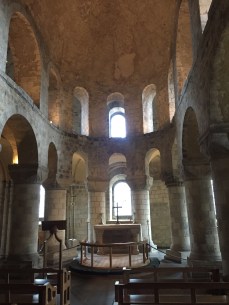


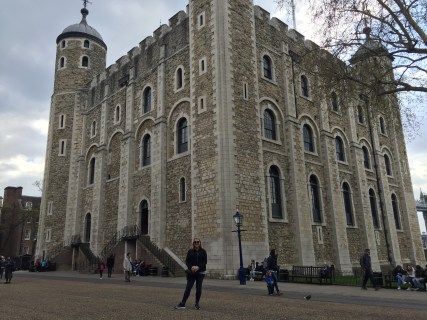 It became less a royal residence and more royal prison in Tudor times. Being “sent to the tower” was not a good thing. Elizabeth I was held here before she was queen in the Bell Tower.
 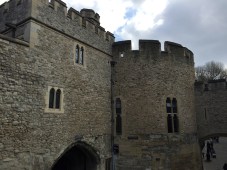 This part of the Tower was built in the mid to late 1200s.


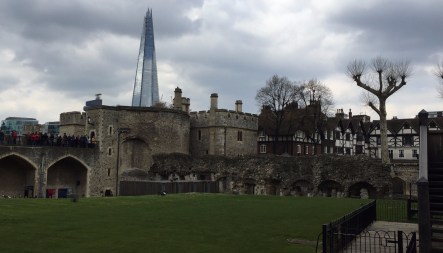 The old Roman city wall. London was founded/invaded by Emperor Claudius and his Roman Army. They built a wall around the city. William the Conqueror built his castle off the remains later.
 Andy in the Inner Ward (Courtyard.)


 Leaving through the Middle Drawbridge, built by the Duke of Wellington for military purposes in 1834.


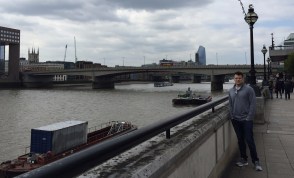 It looked much grander (and cooler) back in the day with houses built on it.
 The pretty, more eye catching bridge is Tower Bridge. It doesn’t have the name recognition or the longevity that London Bridge has, but it is the one you think of and see when you google London.
  The Victorian Tower Bridge was opened for use in 1894 and it is painted some interesting shades of blue and gray.

 The view looking South, featuring the HMS Belfast and the Shard.




 xoxo-sk


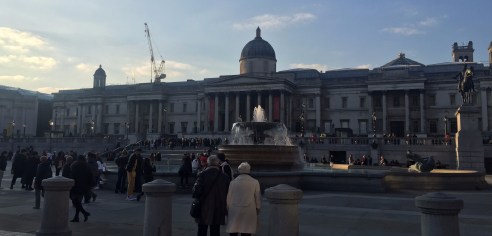 Trafalgar Square is anchored by the National Gallery and sits North of the Thames, in Covent Garden.

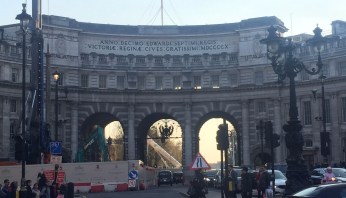 We arrived in the afternoon, so most of the day was spent exploring our immediate surroundings.
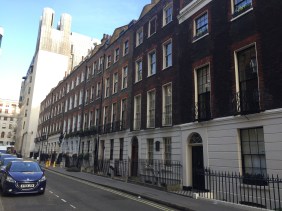 One of America’s Founding Father’s, Benjamin Franklin’s house. He was born in Boston, made a name for himself in Philadelphia, and spent 16 years living and working in this house off Craven Street before returning to America to help start the Revolution.

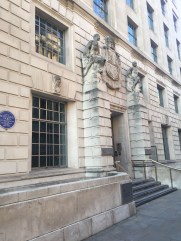 England is an old country, has been in a lot of wars, and has monuments/memorials to commemorate them all.


 Dinner was prawns and a lobster roll at the aptly titled, Burger and Lobster.

 I don’t even know where exactly we ended up, some kind of casino I think? But, Andy was bound and determined to find a tv with the Masters playing.
 So, first night in London, drinking a Danish Carlsberg (from my adopted home), watching the Masters, played in Georgia (my home.)
 xoxo-sk
 xoxo-sk