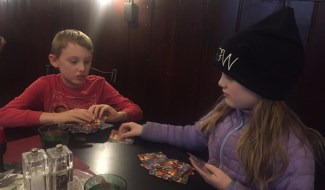
Everyone is excited (look at the faces) for Vienna! Vienna is Austria’s capitol, and the majority of people here speak German. Vienna was settled by Celts as early as 500 BC, and then used as a military base for the Romans in 15 BC (defense against the Germanic tribes.) In the 15th century, it became the center of the Holy Roman Empire, with Vienna becoming the base for the Habsburg dynasty. During the Napoleonic Wars (1804) it became the official capitol of the new Austrian Empire.
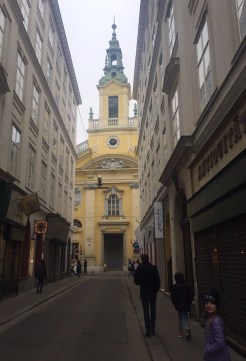 After checking into the hotel, we headed past the Evangelical Church HB (Reformed City Church) for some lunch at the Wiener Küche. We shared some schnitzel, potatoes (both fried and creamy), and apple streusel. I also had some kind of squash soup, at least that’s what I think it was. Doesn’t really matter; it was a lunch special, and it was good.
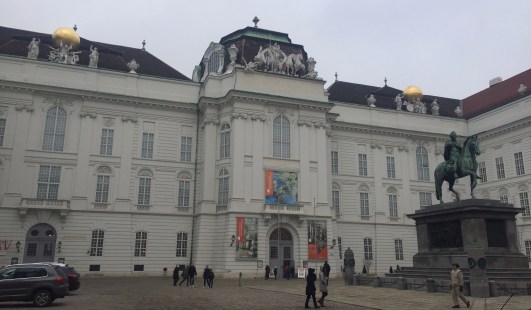
 We started our Viennese exploration at the Hofburg Palace. The Hofburg was the home of the Royal Habsburgs for 600 years. It was built in the 13th century as a medieval castle and expanded with each new emperor’s reign. The Hofburg is a massive complex, consisting of 18 wings, 2,600 rooms, and 19 courtyards. Presently, it is the home and workplace of the President of Austria, with 5,000 people living and working there.
 The Amalienburg (above) was built in the 16th century, and it houses Empress Sisi’s apartments, part of the Imperial Apartments we toured.
Interior Courtyard of the Hofburg with statues of Emperor Francis II.
We explored the massive Silver Collection first. There are 7,000 items displayed.
My new favorite way to explore museums/castles/etc. are self guided audio tours. Andrew especially loved it. You go at your own pace. The Hofburg did a great job telling interesting stories about each thing.  Kids were pretty impressed with the massive (30m!) gold Milan Centerpiece.
  A plate collection selfie.
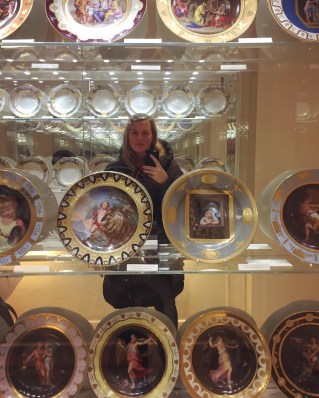 The end of my legally taken pictures in the Silver Collection.
 A scale model of the Hofburg circa 1900.
 I am usually very much a rule follower. But sometimes, I can’t help myself. I’ve found that with some Palaces/Castles you aren’t allowed to take pictures. Apparently, there is no photography permitted in the Imperial Apartments or the Sisi Museum. They don’t allow it because (the lady said) it slowed people down and (via the website) people were taking pictures with the flash on (big no no.) So, I didn’t feel too bad about sneaking some (quick and non flash) pics. Andy (of all people) didn’t like me misbehaving.
Emperor Franz Joseph and his wife Empress Elisabeth’s apartments. They were lovely, and the audio guide was really informative and interesting. The red room (above left) was the Emperor’s study. The blue/green room looks like a dining room, but was actually a conference room. The red room with the small bed was the Emperor’s bedroom.
We visited the Sisi Museum last. K loved listening to the stories about the tragic Empress Elisabeth. Sisi, as she was called, was born in 1837 in Munich, into the Bavarian royal house. At 16, she married Emperor Franz Joseph I. The Emperor was in love with Sisi, who was thought to be one of the most beautiful women in Europe. Unfortunately, she did not enjoy the Hapsburg court life, full of rules and protocols. She was unprepared, unhappy, and had a dominating Mother-in-law. Her first daughter died in 1857, and Sisi spiraled into a depression that would stay with her. Throughout her life Sisi exercised assiduously, fasted, and dieted. It was the only way she felt in control. (Her diet and exercise regime were really crazy, you can look up the details.) She gave birth to an heir in 1858, and seemed to get some happiness out of it, becoming more assertive at court. In 1889, her only son and his mistress committed suicide. Sisi never recovered from the tragic loss and withdrew from court. She traveled, usually incognito, and became obsessed with preserving her beauty. In 1898, while traveling privately in Geneva, Sisi was stabbed by an Italian anarchist. Such an interesting and sad lady.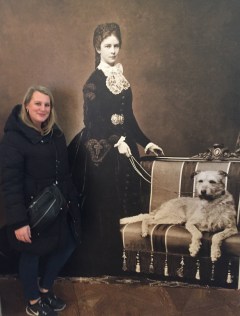
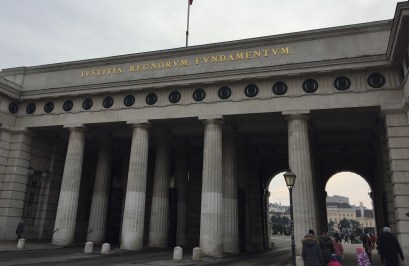 Walking from the Hofburg in Hero’s Square through the outer castle gate to the massive Maria-Theresien-Platz. We are standing in front of the Empress Maria Theresa Monument. She sits atop the monument, with her military commanders on horses below her. The Square is populated by various museums.
 Kunsthistorisches Museum, I think… There were tons of very similar beautiful museums in the Square (which we did not have time to visit.) I absolutely loved the sculptured bushes.
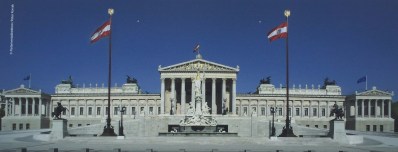
The under construction Parliament. The picture above is what it is supposed to look like. From what we could tell it is a beautiful building.
Continuing down Ring Road, we came across the Dr. Karl Renner monument in Rathauspark. He was an Austrian politician. It is one of the more interesting looking (not that well done?) monument/statues I’ve seen.
Vienna City Hall/Rathaus had a little winter festival going on in the Park in front of it. (It had a double decker ice skating rink!!)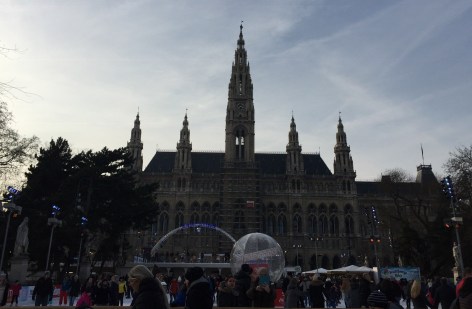 The City Hall is the seat of the local Vienna government. It was built in the late 19th century. Atop the 98m tower is the Rathausmann, a medieval knight, symbolically guarding City Hall.

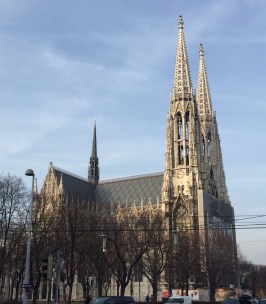
The gorgeous Votive Church (my fav Vienna Church) was constructed in 1879 after an assassination attempt on Emperor Franz Joseph (Empress Sisi’s husband) in 1853. The Church was built to give thanks to God for saving the Emperor’s life. It is built in the same Neo-Gothic style as the neighboring Rathaus. They look very similar.
 As the afternoon went on, Andy started to not feel good (this does not bode well, sickness usually hits the kids and me, but rarely him.) With hopes tea may revive him, we stop at Aida Cafe. We have the usual, English Breakfast for me and Earl Gray for Andy, with Apple Cake and Aida Cake with cream. After the amazing cakes and pastries at Ruszwarn in Buda, these paled in comparison.
Schottenkirche, Our Lady of the Scots Catholic Church founded in 12th century bu Benedictine monks.
Bis Auf Widerruf Gestatteter Durchgang (Until revoked permitted passage) sign atop the entrance to the Freyung Passage, a fan shopping arcade with a fancy fountain.
 Church on the Court (or Church of the Nine Choirs of Angles) was built at the end of the 14th century. It is located in the Am Hof, one of the most historic Squares in Vienna.
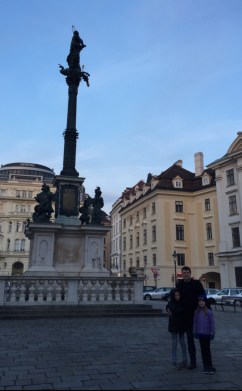
 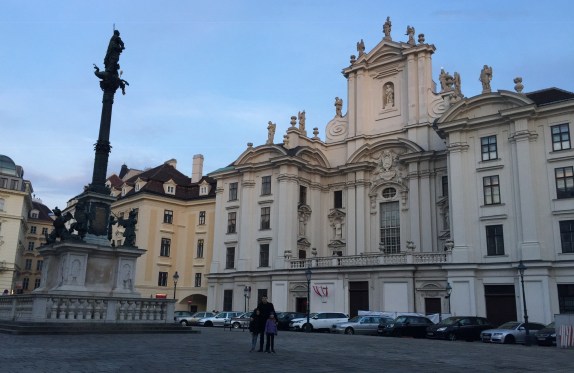 In the center of the square is the Marian Column, built the in thanks of Mary for helping defeat the Swedish during the Thirty Years’ War.
Peterskirche/ The Church of Saint Peter is believed by some to date back to the times of Charlemagne. A Roman church, built on a Roman settlement, in the 4th century. The newest version of this Church is a Baroque creation, built in the early 1700s.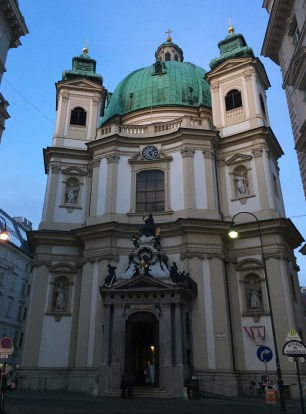
Andrew and I in front of the Plague Column on Graben. The Column was built after the Great Plague epidemic in 1679. It is a really cool looking sculpture, and you can’t really see it well in this picture.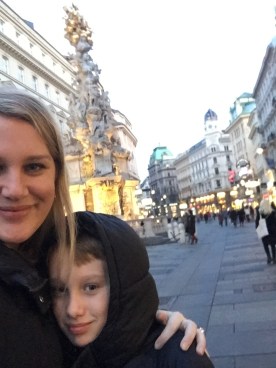 A quick stroll by the apartment Mozart and his family lived in from 1784 to 1787 when he was at his creative peak.
 Dinner was a shared sausage the size of K’s head (and she has a big head.)
 xoxo-sk
ps. The day ended with Andy feeling rough, and us all turning in early. It’s not always pretty. #reallife
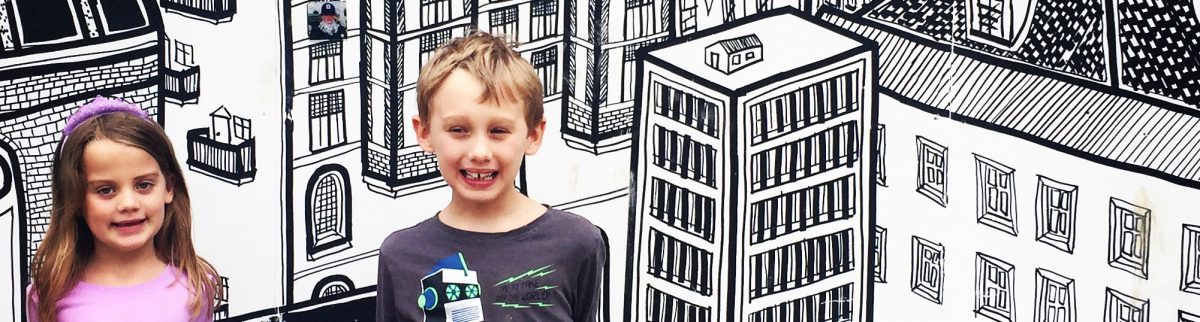
 We celebrated my Birthday on the 14th. I got sweet cards and gifts from the family. Andy sent me to get a massively expensive pedicure (seriously they are pricey here, and I would never go on my own.) It was lovely. Andy was still really sick, so we decided to celebrate properly the next weekend.


 With Andy feeling better, we went to dinner at the French lalala for a belated birthday celebration.


 Ending the night at our favorite neighborhood bar, The Black Swan.
 The weather was beautiful (finally) so my friend, Sehrish and I decided to take advantage of it and walk around Copenhagen. We started the day with coffee (her) and tea (me).
 We walked from Nørreport thru City Central to Christiania. We wanted to try the vegetarian restaurant there, Morgenstedet. I had vegetarian lasagna and a variety of their daily salads.


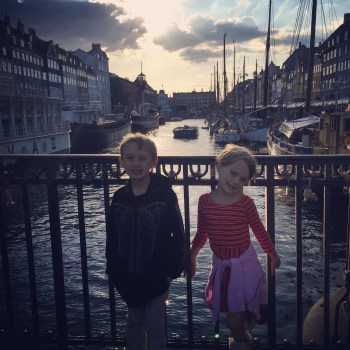
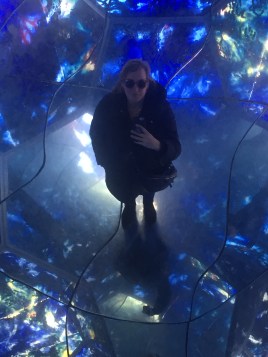 Ending a lovely day with another tea in Nyhavn.


 We got there in the early evening, and the kids couldn’t wait to get in the water. Andy and I waited until the next day to go in. Andy’s still not feeling great, but he’s a team player.
  A half day in Vienna, a train ride, a bus ride, and playing in the water make for a very tired group.

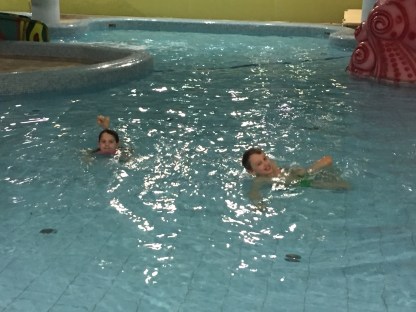 The kids spent most of the morning wearing themselves out, going down every ride they could. After lunch, they went to the kids club (the babysitter), and Andy and I got to visit all the saunas. They had four different kinds and an ice cold plunge pool. I am not a huge sauna person, but Andy really likes them. I can only stand them for so long.

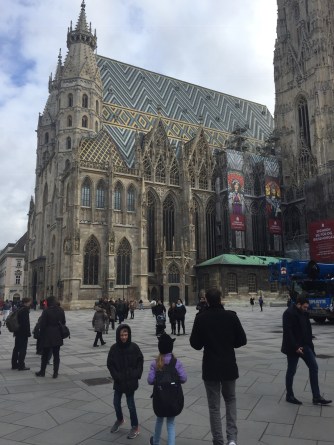
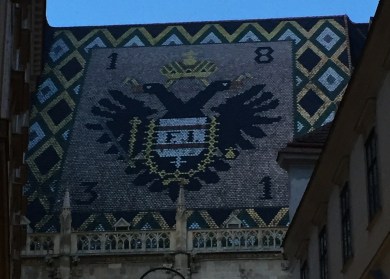


 K loves lighting prayer candles. She says she prays for her family and world peace.

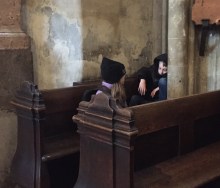 Another pretty Church that I can’t remember the name of (or that I couldn’t figure out from Google maps.)
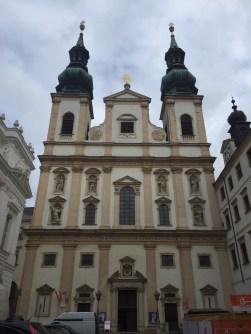 This Art Nouveau clock, built in 1911 by Franz von Matsch, is tucked away between two Anker Insurance Company buildings. It performs a little parade of historic figures everyday at noon. Our timing didn’t work out to see the show, but the clock was really cool looking.
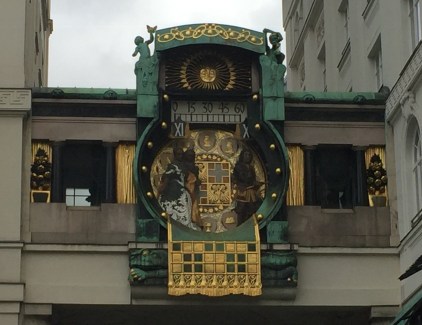 They do love their composers here. Although technically born in the town of Bonn, Beethoven spent most most of his adult life in Vienna (35 years.) He originally came to study under Mozart at 17, but circumstances took him back to Bonn, and Mozart died in the meantime. He returned at 22 to study under Haydn. The picture on the right is the Sebastian Kneipp Fountain. He was a Bavarian priest and the forefather of naturopathic medicine.


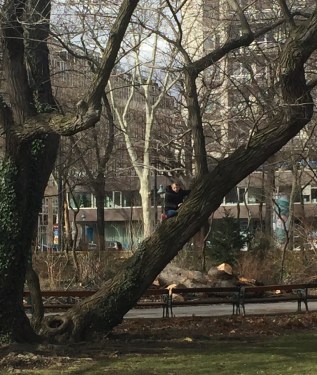
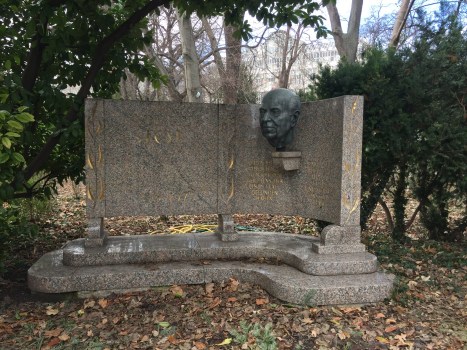 Monument to Austrian songwriter, composer, and conductor, Robert Stoltz. His career took him to Berlin often, and during WW2, he smuggled Jews from Germany in the trunk of his limo 21 times. The Nazi’s eventually came after him, and he had to leave Austria.


 Vienna, our time together was too short. Hopefully, we will meet again. I still need to visit my favorite painting, The Kiss, at The Belvedere, visit Schonbrunn Palace, and see the Imperial jewels at the Schatzhammer.
 xoxo-sk


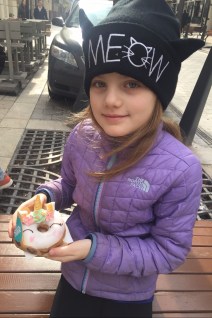 We passed this store on the first day here, and Katherine knew she couldn’t leave Budapest without having a unicorn doughnut. She loved looking at it, but did not love how it tasted. She is not a mascapone fan. Her Dad helped out.

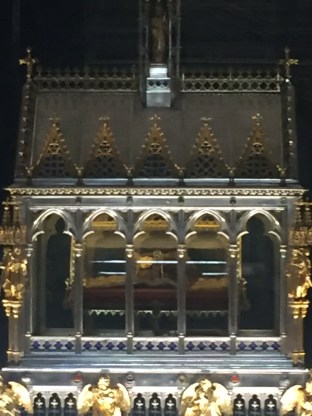
 In the 18th century, St. Stephan’s Basilica began it’s life as a theater. Plans and fundraising for a new church began in the early to mid 1800s, and the Basilica was consecrated in 1905.


 After the Basilica, we strolled down Andrássy Avenue. There are beautiful homes and shops along the walk. The beautiful Hungarian State Opera House was covered in scaffolding. I’m sure it’s lovely, and they were nice enough to show us a picture of what we were missing. That’s the way it goes sometimes with old cities and old buildings.


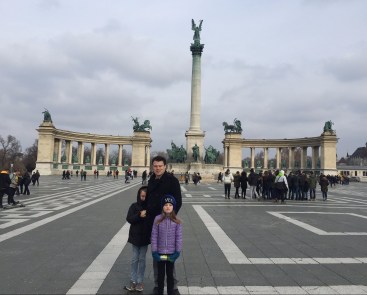 Andrássy Avenue ends at the city’s largest square, Hero’s Square. It was built at the end of the 19th century, and it honors important people from Hungarian history. It is punctuated by the Millennium Monument. The 36m tall colonnade monument has the Archangel Gabriel atop it, holding the Hungarian Holy Crown of St. Stephen and a double cross. At the bottom of the monument are 7 Magyar Chieftains. Statues on the Left and Right include Hungarian kings, leaders, and military heros.


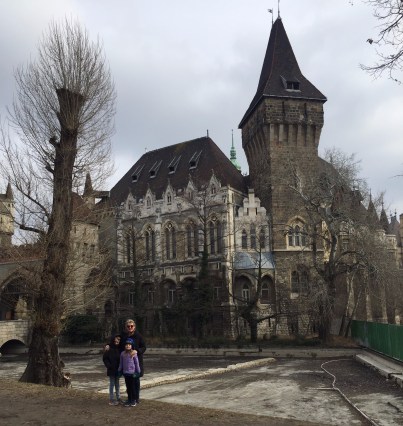 Vajdahunyad Castle was built in 1896. It was designed by Ignác Alpár to resemble various buildings in the Hungarian Kingdom, especially Hunyad Castle in Transylvania. It is said Bram Stoker’s Castle Dracula was based on Hunyad Castle. It is a hodgepodge of architectural styles.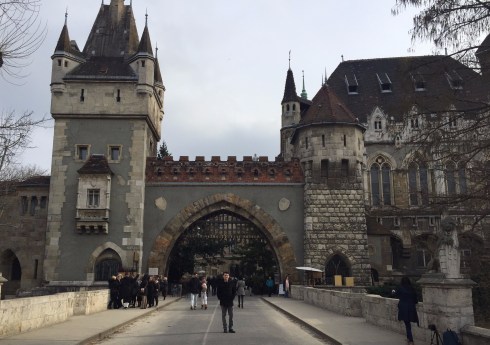
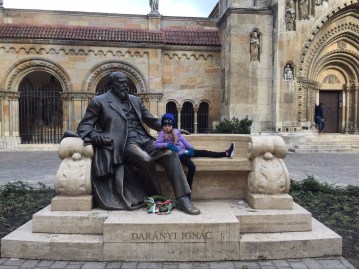
 The Ják Chapel. The inspiration for the Castle’s Chapel was a 13th century Abbey Church in Ják (western Hungary.)

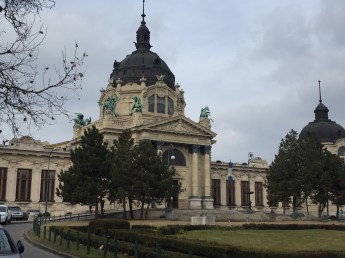 The largest and one of the most popular thermal bath in Europe is the Széchenyi Thermal Bath. This medicinal bath is heated by underground thermal springs, with the water full of healing minerals. It was built in 1913.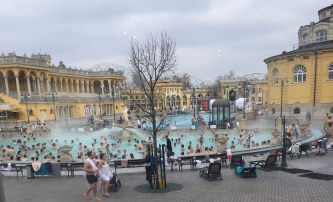


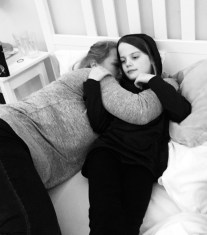
 The beautiful Dohány Street Synagogue. It was built in the mid 19th century and is the largest synagouge in Europe, holding 3,000 people. Unfortunately, since we scaled back on some of our outings, we weren’t able to get over to this side of town to visit during the day. It did look beautiful lit up at night. This Moorish influenced complex also houses the Hungarian Jewish Museum, a cemetery, Hero’s Temple, and a Holocaust Memorial Park.
 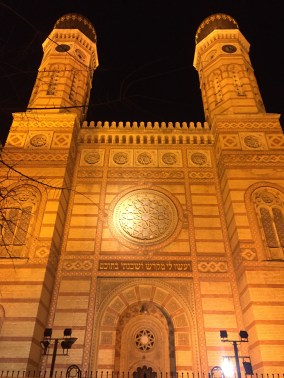 Beautiful ornamental details.


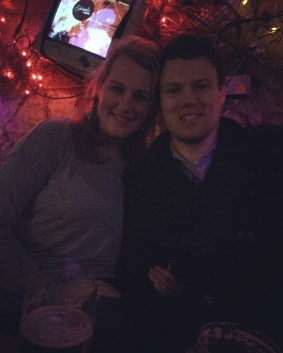 Yeah, we were those people with their kids and their ipads at the bar. We picked a popular touristy one, so there were all kinds of people there, no one cared. Kids thought all the decorations were crazy.
 After our quick drink, we headed to dinner at kid friendly (and Scottish chain restaurant) BrewDog.

 Andrew tried some of Andy’s hot wings. For a boy who is a super unadventurous eater, it’s always shocking to me he will try hot stuff.


 Goodbye Budapest, you were great, wish we could have done more. Maybe an adults only visit is in the future…

 The Opera Panopticum exhibition, celebrating the music of Hungry in the 19th century. It looked like a creepy masquerade party.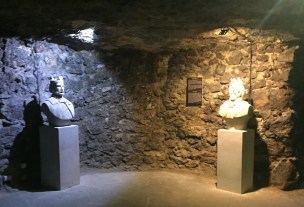


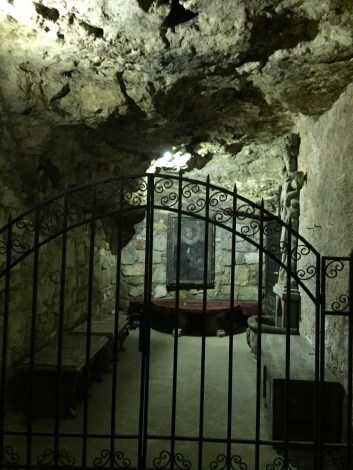 Later made famous by Bram Stoker, Dracula has always been feared and known for his cruelty. He was often referred to as “Vlad the Impailer” or the Vampire of Havasalföld (his Castle.) According to Bonfini, the biographer of King Matthias, Vlad III Dracul was captured by the King in Transylvania in 1462 and transferred to the Labyrinth’s prison for a ten year sentence. Reasons were never really given. His wife, Justina Szilagyi was cousin to Matthias.

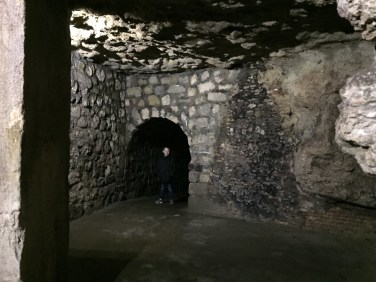 Andrew loved it! There were parts that were pitch black and foggy, you were supposed to walk with the assistance of a rope. It freaked K out.
 In front of the the Tower is a bronze cast of the coronation mantle worn by the Hungarian Kings. It was first used in 1031 by King Saint Stephen and the last used by King Charles IV in 1916.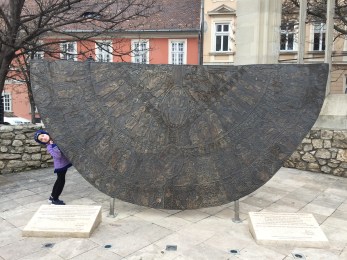
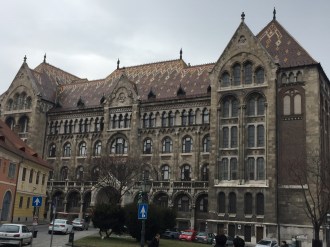
 The Medieval Jewish House of Prayer. It is a restored 14th century Synagogue and now a Museum.
 No clue what this building actually was, but I really though it was interesting. I looked it up later and it’s a Salon?! Ok.
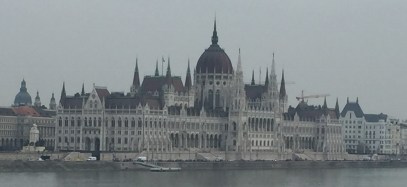
 The massive Hungarian Parliament in Pest as seen from across the Danube in Buda.
 Heading over the Margaret Bridge back into Pest. Over Andy’s shoulder you can see the Parliament in Pest, and on Andrew’s side is Buda’s Castle Hill in the distance.
 After making it across the bridge, back to Pest in one piece, we caved and got the kids McDonalds. Our go-to order is a shared 20 piece nugget, large fry (no drinks, we always carry water bottles.) They’ve been troopers.
  Walking along the Pest side of the Danube, you can see Buda Castle in the horizon.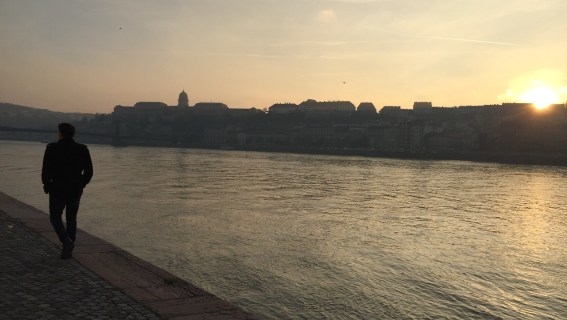
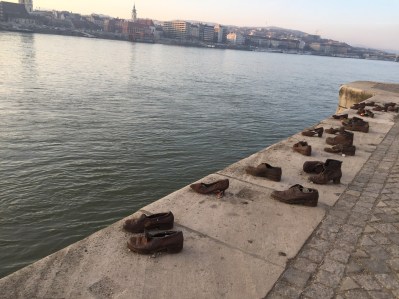 Along the riverside promenade is “Shoes on the Danube Bank.” It’s a memorial to honor the 3,500 people (800 Jews), killed by Militiamen from 1944-45 during WWII. People were ordered to remove their shoes, and stand at the waters edge. When they were shot, their bodies fell forward into the river and were washed away, leaving only their shoes behind. There are sixty pair of iron shoes, some women’s, some men’s, and some belonging to children. A very visual and visceral reminder of some of the horrors of the time.

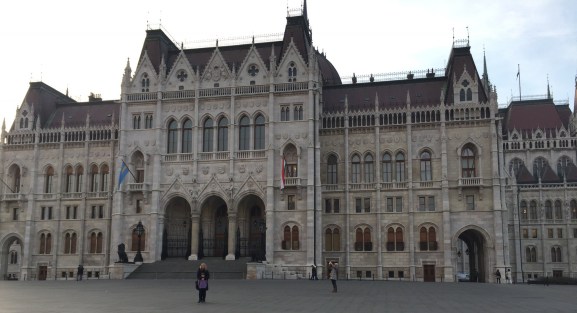
 The Hungarian Parliament Building is the largest building in Hungry and was finished in 1904. It has 691 rooms and 12.5 miles (20km) of stairs. After WWII, in 1949, Hungry became a People’s Republic, a Communist/Socialist government. A red star was added to the top of the building. They were under the Soviet’s umbrella. In 1989 a parliamentary republic was put in place, and the star was removed. The unicameral, National Assembly of Hungry, currently uses the building. The Prime Minister’s office is elsewhere.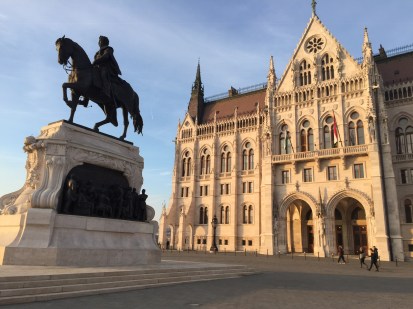
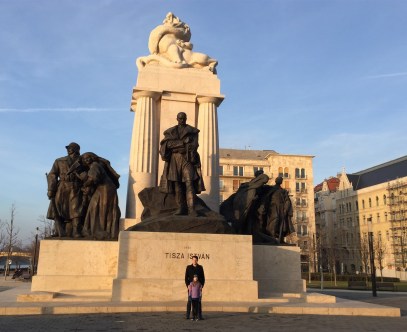 Gróf Tisza István Mounement. He was a former Hungarian Prime Minister.
 Then Kossuth Memorial, built in the early 1900s, celebrating the former Hungarian Regent-President Lajos Kossuth.
  In the Square there is a memorial to the victims of the 1956 massacre at Kossuth Tér. The victims were protesters of the 1956 Hungarian Revolution against the Communist Soviets. Not much is known about what happened, with the number of victims ranging from 22 to 1000.

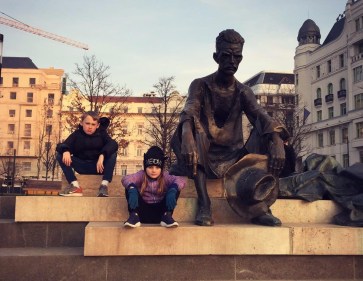 A and K sitting with Hungarian poet Attila József.
 Our Airbnb was around the corner from St. Stephen’s Basilica.
 Calling it a day.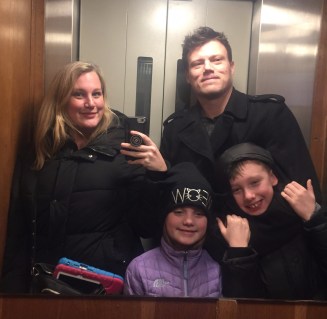
 xoxo-sk


 I did not know before this trip that Budapest was a combination of two cities, the old town Buda and the newer Pest, bisected by the Danube River.
  As you walk across the Chain Bridge you can see Buda Castle looming over you.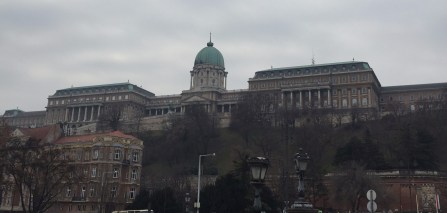


 King Béla IV built the first royal residence on Castle Hill in the mid 13th century. Following Kings extended and reinforced the Castle and it’s outlying additions. By the 15th century, King Matthias’s court had brought Buda to European prominence. In the mid 16th century the Turks invaded Buda, and it became part of the Ottoman Empire. They were eventually defeated in 1686 by the Austrian Hapsburgs and allies, and the medieval palace destroyed during the battle. The Habsburgs annexed Buda into their empire and reconstruction begun. Various battles/wars and rebuildings have taken place over the years (after WWII specifically.)

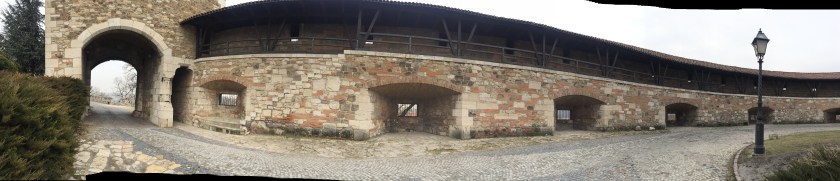 The Great Rondella, the remnants of the medieval fortress of King Matthias (recently repaired.)

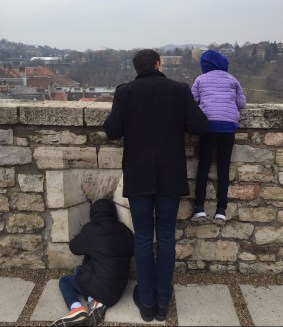


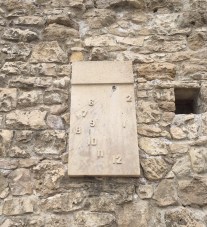


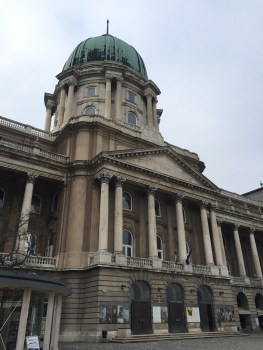 Buda Palace, which it must be said, looks much more impressive and magnificent from a distance (lit up at night especially) than it does up close. It is now home to the Széchenyi Library, Hungarian National Gallery, National Archive of Hungary, and Budapest History Museum.
 In the Lion’s Courtyard of the Palace is the Matthias Fountain. It is crazy looking. It depicts King Matthias leading a hunting party, it includes a dead deer, hawks, and dogs.

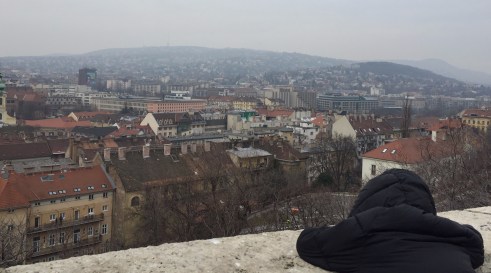 Andrew overlooking the Buda Hills.
 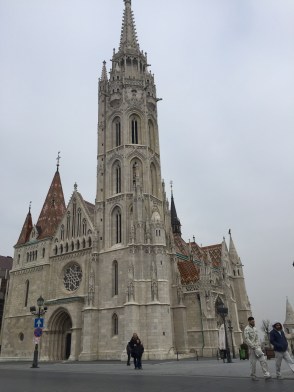 Matthias Church was originally constucted in 1015 by the first Hungarian King, Saint Stephen. That building was destroyed in 1241, and the current Church was built in the 14th century, with restorations taking place in the 19th century as well. When Buda was occupied by the Turks, the Church was turned into a mosque. It lasted for 150 years until the Turks were driven out of Hungry by Christian missionary forces in 1686.


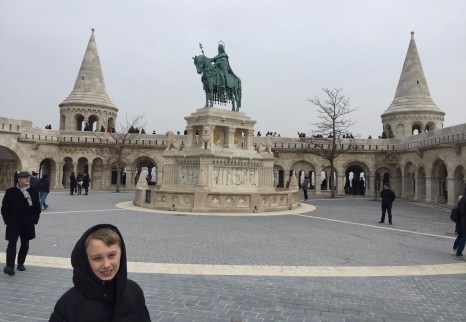 Right beside Matthias Church on Castle Hill is Fisherman’s Bastion. It is a viewing terrace, with towers and walkways, built in the late 19th century. A bronze statue of Stephen I sits in its courtyard.
  The twins in one of the seven towers overlooking the Danube River.
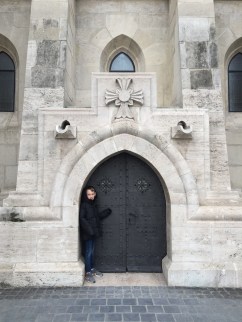 An Andrew sized door.
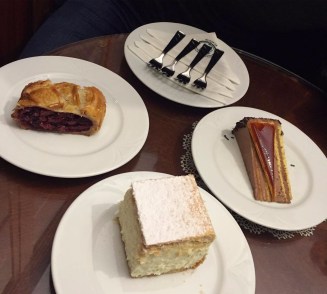
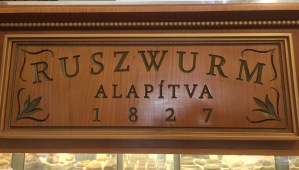 We went to Ruszwurm Bakery in Old Town Buda and had sour cherry strudel, a Dobos tort, and their famous cream cake. It was amazing, totally recommend going there. If it was on our side of the River I would totally go again (and again.)
 And what real life looks like.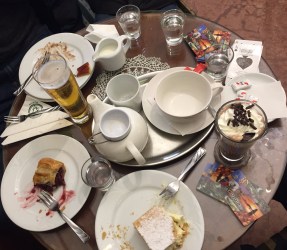
 xoxo-sk


 Drinks at Bar 7 and dancing at Zefside, with some super fancy flaming drinks. I was super smooth and burned my napkin.





 Apple cake and warm chocolate. Not hot chocolate, warm and usually made with dark chocolate. Much to Katherine’s disappointment, things aren’t as sweet here.


 This year Andy and I decided we were going to spend the holidays in Copenhagen. We wanted to have at least one Danish Christmas/New Year’s while we lived here. Since we were spending the holidays away from our families for the first time, we tried to incorporate some of our family’s traditions here. I also made some of our favorite dishes from our travels.


 For Christmas Eve, I made my favorite dish from Rome, Cacio e Pepe.
  We followed dinner with a viewing of Home Alone.
  Katherine and Andy made a plate of goodies for Santa. This year’s offering was very impressive.


 Dinner was pork schnitzel (Germany) and fried mozzarella (Prague), with gelato (Italy) for dessert.


 Like true Danes, we watched the Queen’s New Year Address (in Danish.)




 xoxo-sk