When you are in Rome there are so many beautiful scenic piazzas (squares) and historic churches. There are over 900 churches in Rome. You cannot walk far without coming across a church. 
San Giovanni dei Fiorentini. After almost 200 years of building, this Church was completed in 1734. It is dedicated to John the Baptist and is the national church for Florence in Rome.


Our early afternoon gelato stop. Chocolate covered Lemon for K and Cinnamon and Black Cherry for the adults.


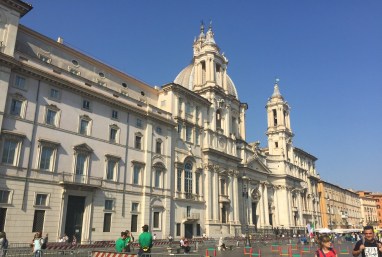
One of Rome’s most picturesque Piazzas- Piazza Navona. It is a lovely square, with beautiful fountains, cafes, and shops. It was built on the site of the 1st century Stadium of Domitian, where chariot races were held. It has served as jousting arena in Medieval times, a home to festivals and marketplaces, and it continues to be a hub of activities to the Romans. The Church of Sant’Agnese in Agone.
 Porta’s The Fountain of the Moor from 1576.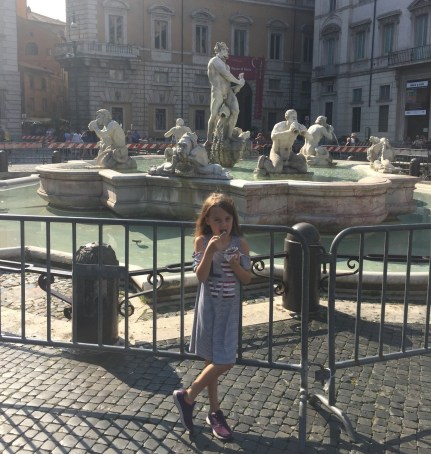
The Fountain of the Four Rivers was sculpted by Bernini in 1651. It represents the four great River’s of the World, circa mid 1600s, the Danube, the Ganges, the Plate, and the Nile.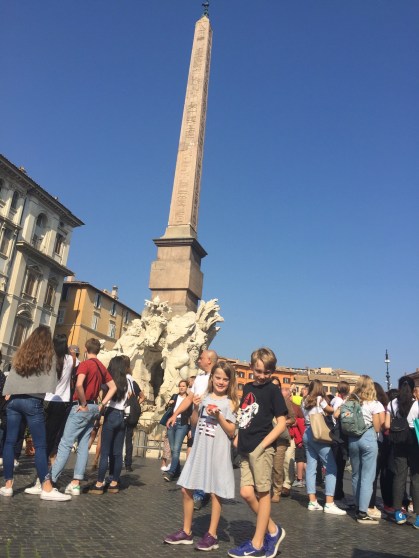


The Fountain of Neptune by Bitta and Zappala, built in 1878.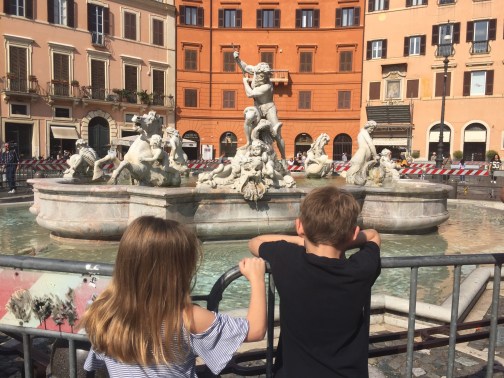
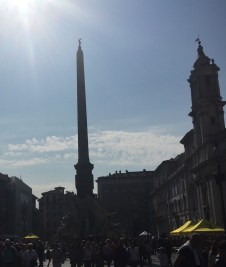
They had some kids activities going on.


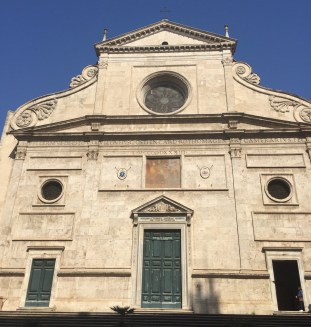
Nugget snack stop for A on the steps of the Basilica of Sant’Agostino (15th century.) Heaven forbid we go to a country and not visit the local Mickie D’s. 

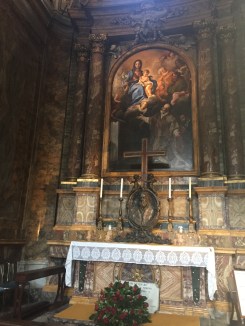
The Baroque Santa Maria Maddalena.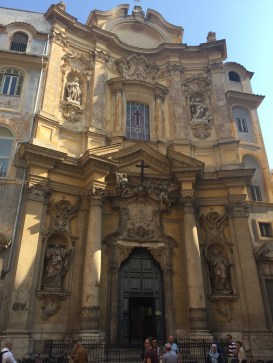
The Pantheon is quite the engineering feat. Centuries old, it is the only intact ancient Roman temple. Emperor Hadrian built the Pantheon in the early 100s. The dome is 142 feet vertically and horozonally. It is the largest unsupported concrete dome in the world, with 25 feet thick walls. The dome is a perfect half-sphere.
 The Pantheon’s 27 foot wide oculus.
  Since there is a massive hole in the ceiling, when it rains, water falls inside. The floor is slightly slanted and designed with small holes to allow water to drain.


Like most Roman symbols, the temple has been tuned into a church, the Basilica of St. Mary and the Martyrs. It was probably one of the reasons it has been so well preserved. 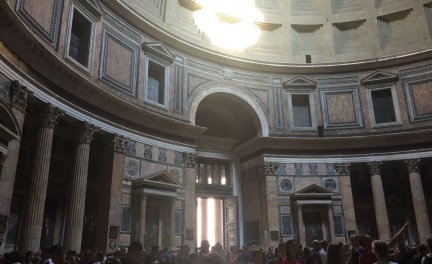
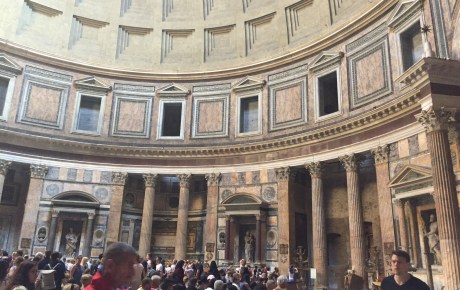
 There are 16 Egyptian granite Corinthian columns at the front, each standing 40 feet tall and weighing 60 tons.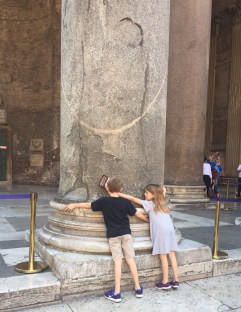
In front of the Pantheon is the marble Fontana del Pantheon, built in 1578. The obelisk atop it was built by Ramses II and brought from Egypt. It has been redesigned and reconfigured over the years.


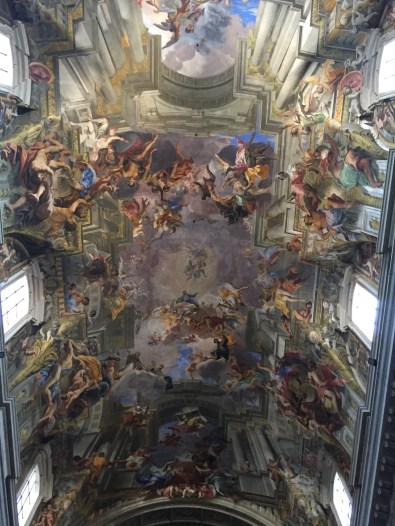
Church of Sant’Ignazio. One of my favorites. The frescoed ceiling is amazing.

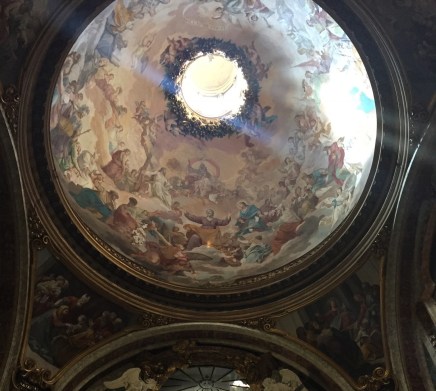


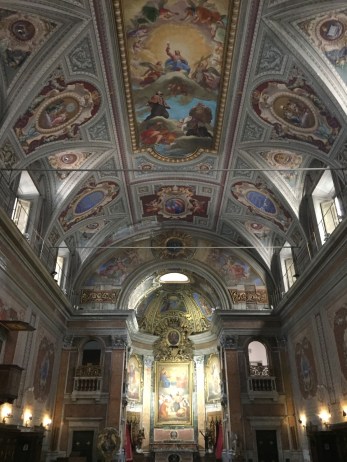
The baroque Oratory of San Francesco Saverio del Caravita (17th-century.)


The Trevi Fountain was designed by Nicola Salvi, finished in 1762 and is the largest fountain in Italy. It is 86 feet high and 161 feet wide. In 19 BC, Marcus Agrippa built an aqueduct to bring water from (8 miles) outside Rome into the city. It ended at the Trevi Fountain. Interestingly, the water from the Trevi Fountain continues on to Fountain of the Old Boat by the Spanish Steps and Fountain of the Four Rivers at Piazza Navona.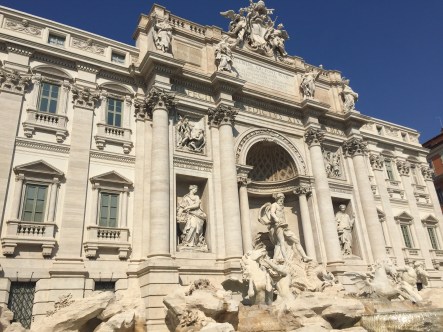 It is super crowded at the Trevi Fountain, so good pictures are hard to come by. In the center of the Fountain is Neptune, God of the Sea, being pulled in a chariot by tritons and horses.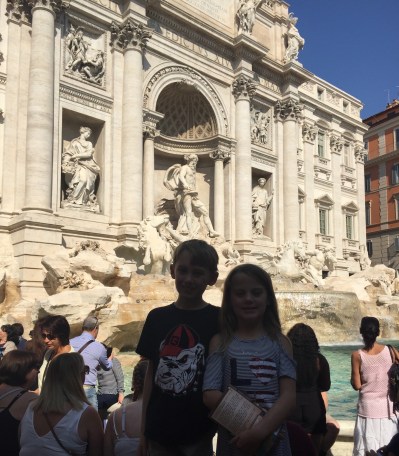
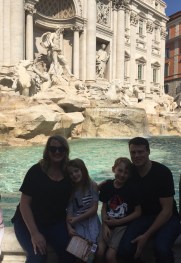
Legend has it that if you throw a coin with your right hand over your left shoulder into the Fountain, you are destined to return to Rome someday. (The kids did not “technically” throw it in the right way.) Over $4000 are thrown into the Fountain a day.
We did a little souvenir shopping for the kids. Katherine decided on a handmade wire necklace with her name, and Andrew got some cool street art.


A quick lunch and water bottle fill up.


There are 2,500 “Nasoni” water fountains throughout the city. It is piped in from the mountains with ancient Roman aqueducts and is routinely tested for purity. So, it is safe, pure, cold, and best of all- free.
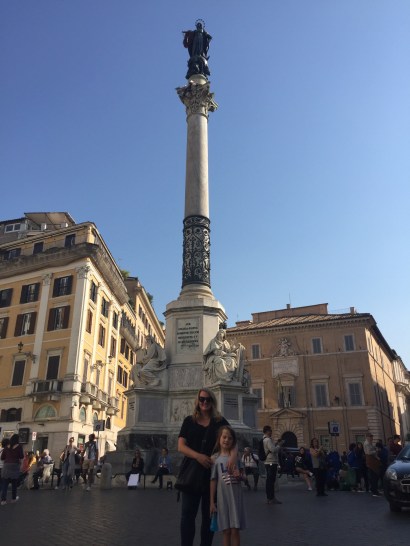
Column of Immaculate Conception, dedicated in 1857. The ancient Roman column itself was found in 1777.
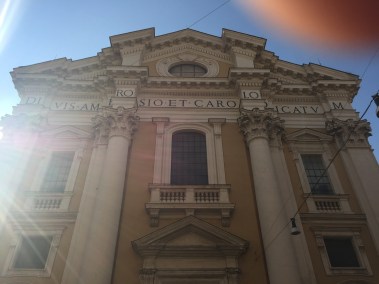
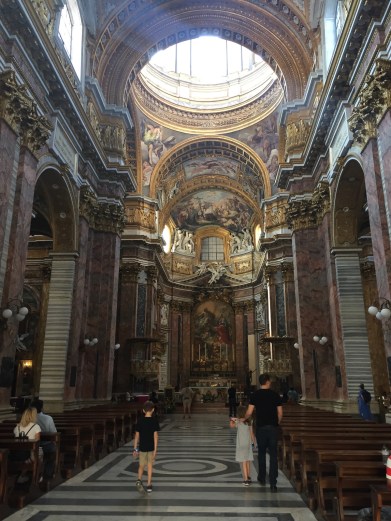
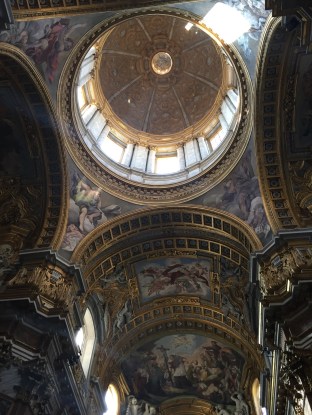
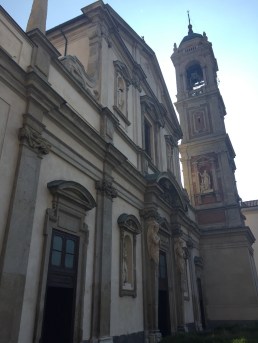
Sant’Ambrogio e Carlo al Corso. Another favorite. Not much on the outside, but beautiful adornments and ceilings on the inside.



The Piazza di Spagna is home to the Spanish Embassy to the Vatican and the infamous Spanish Steps. 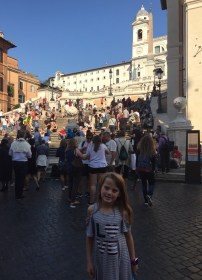
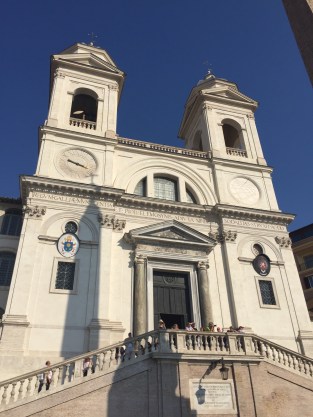
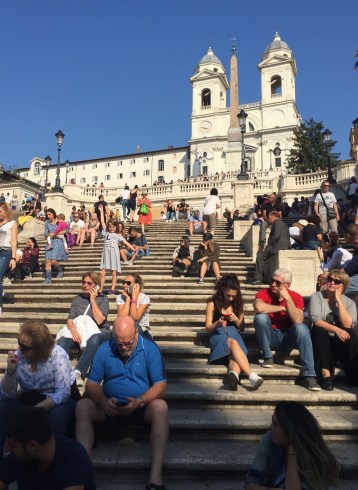 At the top of the 135 Spanish Steps is Trinità Dei Monti. Ironically, it is a French Roman Catholic Church, and the steps were originally built in 1723-25 by the French as a grand entrance to their church.
 At the base of the Steps is Bernini’s The Fountain of the Old Boat. In 1598 the Tiber River flooded, and people had to use boats to get around the city. When the waters finally recided, one lone boat was left in this plaza, and Bernini and his son memorialized it with this fountain.
The Villa Borghese Garden
 Andrew at the Pincio’s Water Clock. The hydrochromometer was placed in the Gardens in 1873.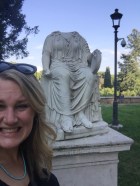


Looking down on the Piazza del Popolo from Pincian Hill. It recently was turned into a pedestrian only piazza.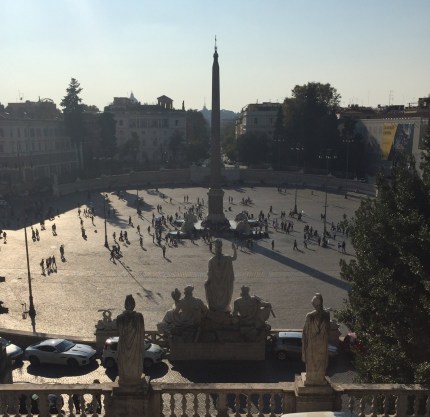
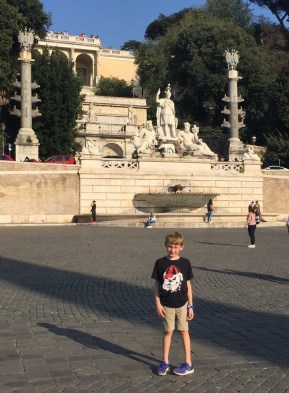 The Piazza del Popolo’s Fontana del Nettuno.
 At the center of the Piazza is an Egyptian obelisk from Ramesses II. It was brought to Rome in 10 BC by Emperor Augustus. It was originally erected in Circus Maximus, but moved to Piazza del Popolo in 1589.


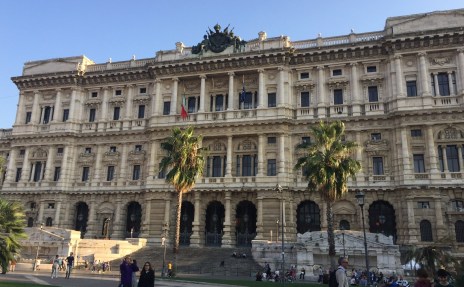
Ending the day with an amazing dinner (yes, dinner- it’s vacation) of lemon gelato, some kind of cream filled pastry, and a freshly made cannoli in Piazza Cavour, beside the Supreme Court Building.




xoxo-sk
ps. They were selling these at some of the souvenir stands. They cracked me up.


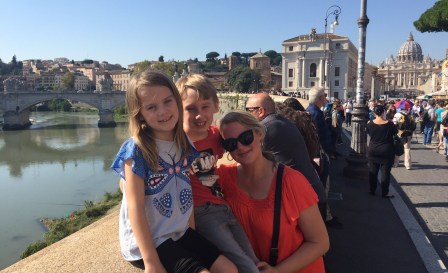 After leaving Vatican City and St. Peter’s Square, we made our way down the road to Castel Sant’Angelo, Castle of the Holy Angel, named after the angel Michael. Legend has it the plague killed hundreds of thousands of people in the 500s, and in 590, Michael landed on top of the Castle, and the plague ended. Originally built in early 100s by Emperor Hadrian as a mausoleum for himself and family, it has been used as a fortress, castle, prison, and now museum.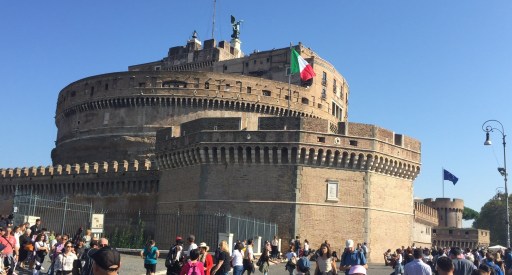


 Andy and I enjoyed their specialty, the pizza platter. It was a sampling of six of their pizzas, each one amazing. The mushroom and fresh basil and mozzarella were my favorites, Andy loved the pesto and ham.
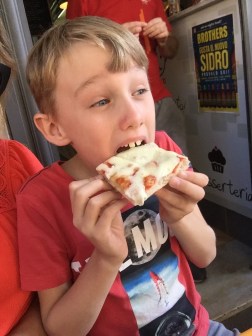
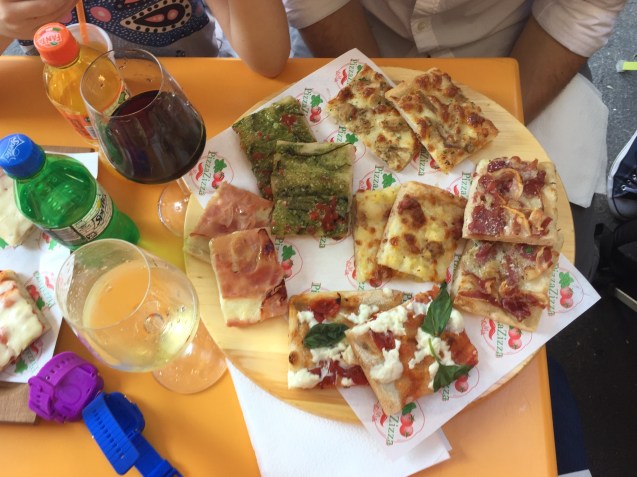 The kids loved their margarita pizza. If you didn’t know, the toppings on a margarita (margherita) pizza represent the colors of the Italian flag- red/tomatoes, white/mozzarella, green/basil. It was created in 1880 to honor Margherita, the Italian Queen. When Andrew finished his, they just brought him more. I cannot tell you how wonderful the hospitality is at this restaurant.
 And like a true Italian, Andy finished his meal with another expresso.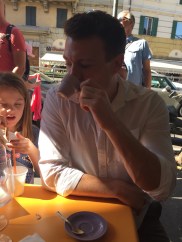
 At the start of the climb.

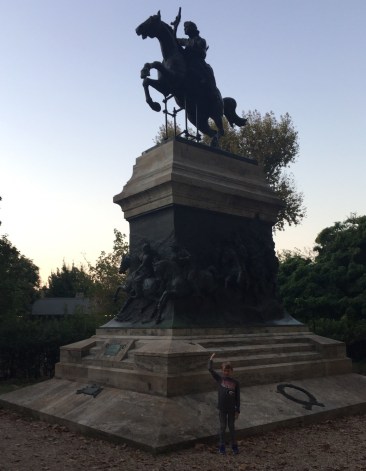
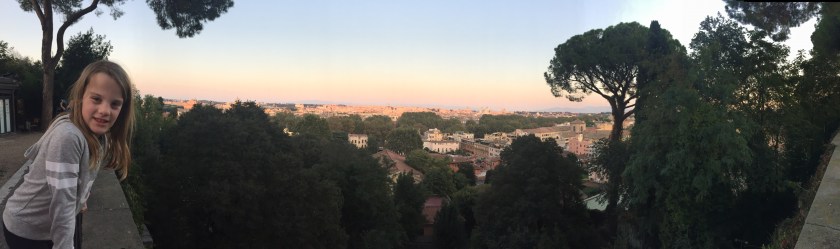


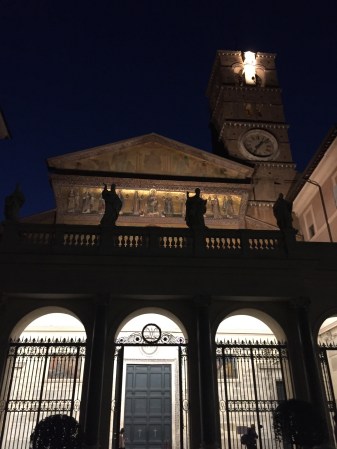

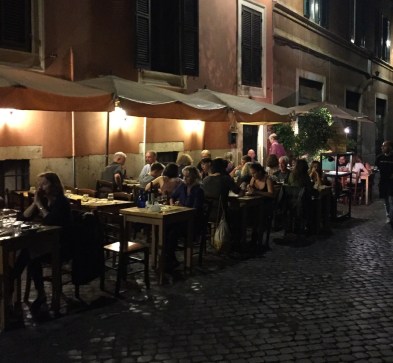 Dinner outside at Sette Oche. My favorite of the nicer restaurants we went to (we didn’t go to any super nice places due to it being an absolute waste on our kids at this point.) I had cacio e pepe, a new favorite I repeated through the trip, and a caprese salad (no before pics, I was hungry.) Andy had lemon linguine, Katherine meatballs, and Andrew (again) had a margarita pizza.


 Goodnight Rome.


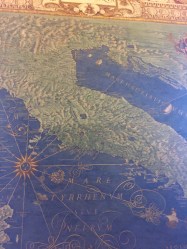
 Pope Julius II founded the Vatican Museum in the early 16th century. It houses countless works of art, including paintings, tapestries, frescos, maps, and sculptures. There is truly so much interesting art to see, more than we could possible see in one morning, especially with kids. The Museum is enormous. It is not super organized and lacks a flow, but I think we saw everything we wanted to see, and in the kid’s case more than they wanted. Here are some (lots) of the pictures, I tried my best to edit them down to my favorites.

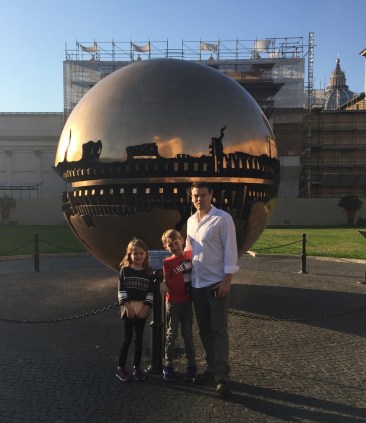
 In the New Wing/ Braccio Nuevo. Andrew with the Statue of the Nile God.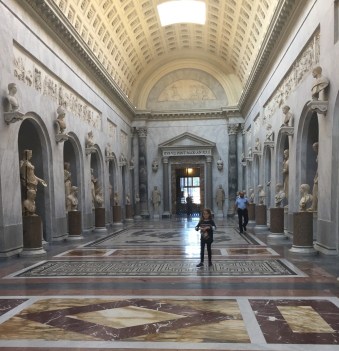
 Staring down a Roman marble bust of Medusa from 2nd century.

 Roman Emperor Antoninus Pius from the 2nd Century AD.


 Katherine sitting by the pond in the Octagonal Courtyard, originally called the Belvedere Courtyard. The Courtyard holds some of the Vatican’s most important statues.
 Laocoön and His Sons was made around 30 BC and found outside Rome in 1506. The sculpture shows the mythological Trojan priest Laocoön and his sons getting attacked by serpents sent by the gods.
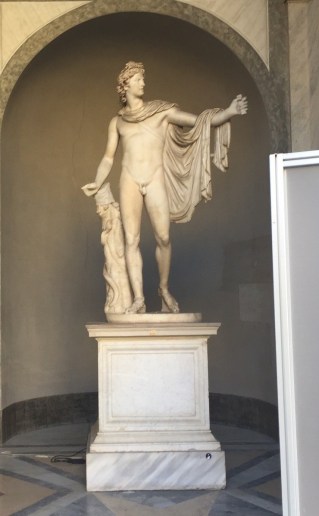 One of the Vatican’s most famous sculptures, Apollo Belvedere. It depicts the Greek/Roman god Apollo having just shot his arrow. This marble Greek statue, from 1st century BC, was found in the 15th century and was the first piece of art in the Vatican’s art collection. Interestingly, this was one of the pieces Napoleon brought back to the Louvre in Paris after his Italian invasion. Obviously, it was returned in 1815.
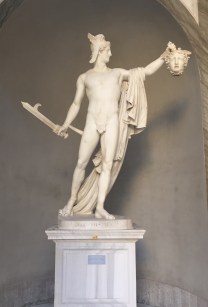 Perseus Triumphant was carved in 1801 by Canova and shows Perseus holding Medusa’s severed head. This piece was inspired by the Apollo Belvedere and took its place when Napoleon took Apollo back to Paris.
  To the left and right of Andy, Katherine, and Perseus are the boxers, Creugas of Durres and Damoxenos of Syracuse. Canova, inspired by the story Periegesis of Greece, finished sculpting the pair in the very early 1800s.
 Venus and Eros from 170.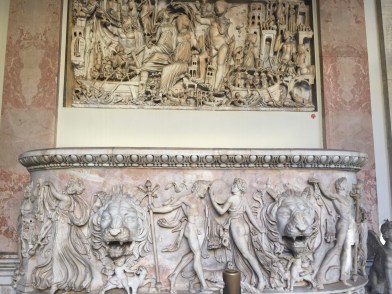
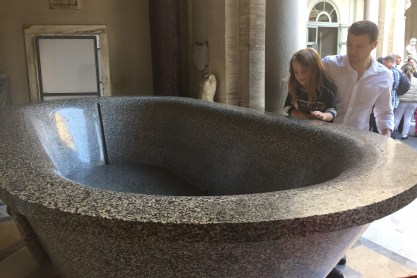 The tub was made out of a single piece of red granite.


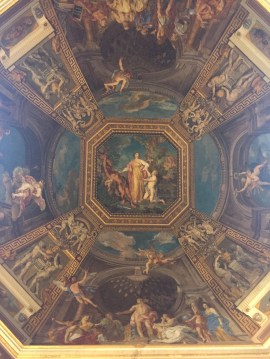 The beautiful ceilings and floors. The stunning mosaics are from the early 3rd century and were reassembled in the hall in the 18th century.

 A red porphyry scarophagus from the 4th century that belonged to Constantine’s mother, Saint Helen.

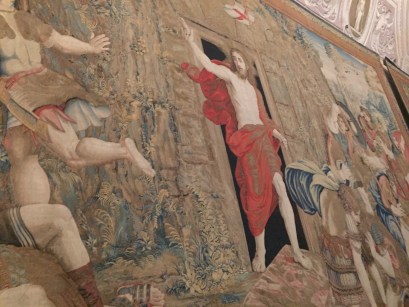
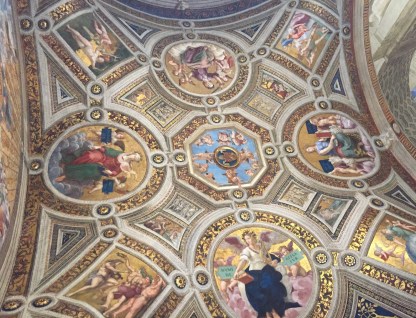
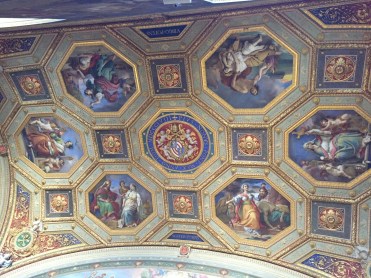
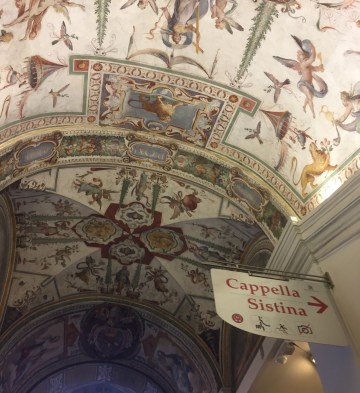
 The Gallery’s ceiling. My favorite thing about the Museum were the amazingly beautiful ceilings, each one more gorgeous then the next. Yep, all that art and I am in obsessed with the ceilings.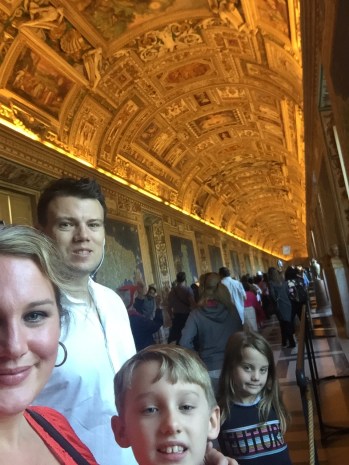




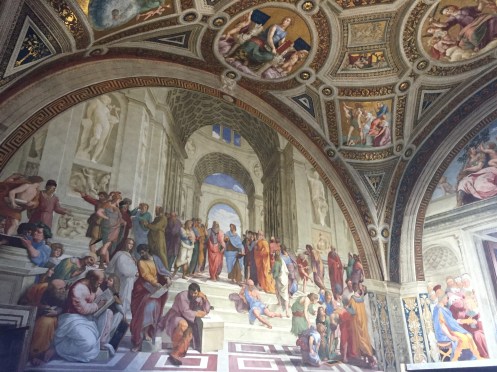 The School of Athens. In this painting, Raphael has imagined a meeting of the greatest minds in history. You can find Michelangelo, Plato, Socrates, Aristotle, and Bramante in the piece, along with Raphael in the bottom right corner.
 Disputation of the Holy Sacrament.
 The Mass at Bolsena. Raphael painted himself into this painting.

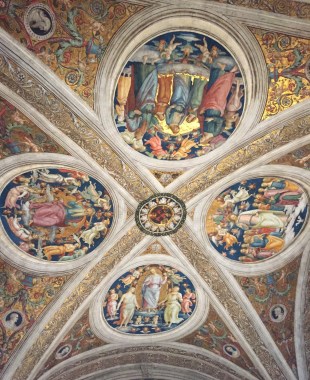




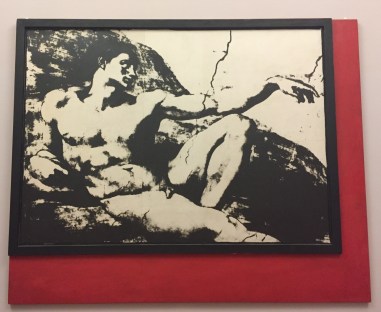 Tano Festa’s piece from 1979 was inspired by Michelangelo’s work in the Sistine Chapel


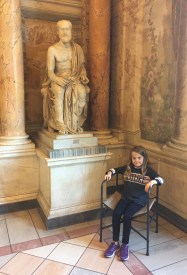
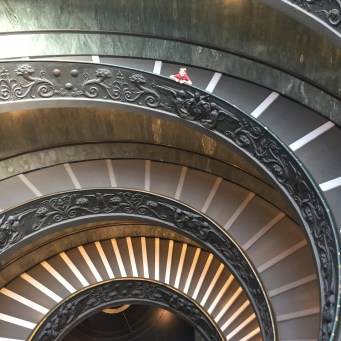 Andrew and the amazing spiral staircase. You are unable to see the original Bramante spiral staircase, but this one is very similar and was constructed in 1932. It a double helix design, made up of two staircases.

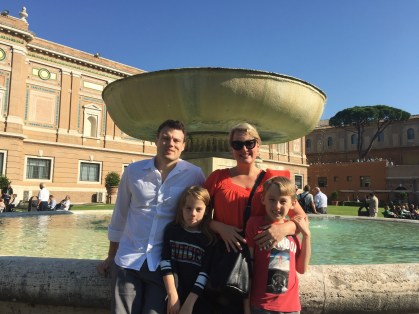 Goodbye Vatican, you were everything everyone said you would be- gorgeously breathtaking and crazy crowded.


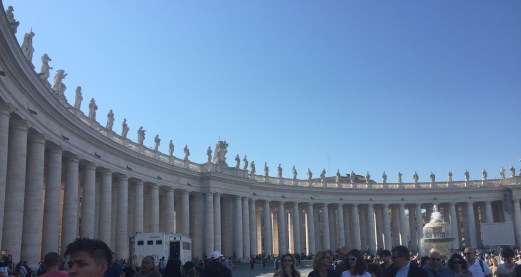
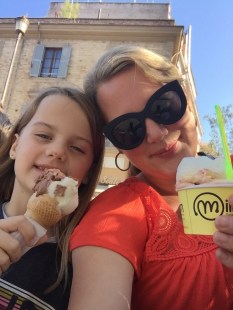 Promised snack break. Gelato flavors today are Strawberries and Cream/White Melon (white melon was the best flavor the whole trip) for me and Cookies/ Nutella for Katherine. Andy doing the espresso thing after a packed morning.


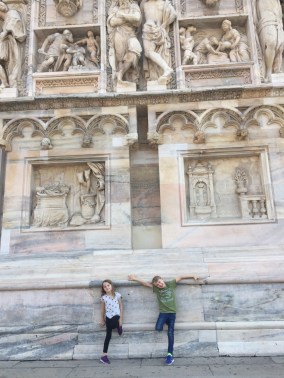








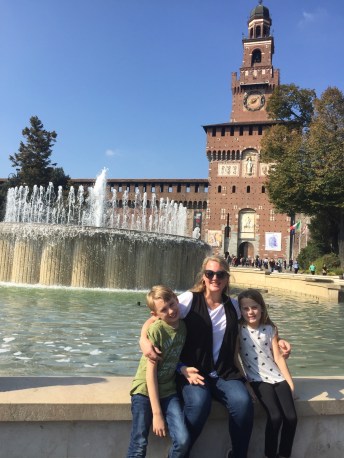


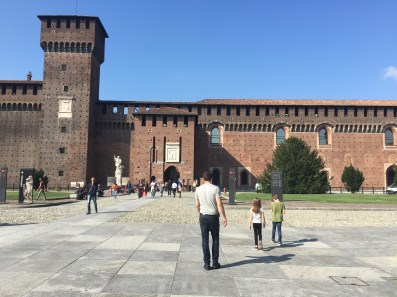
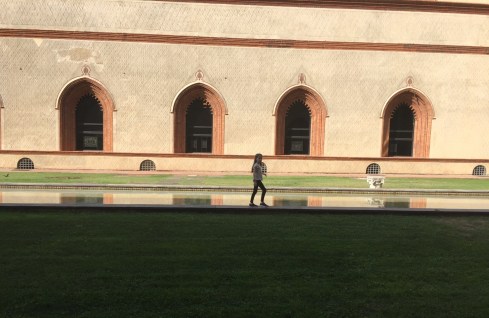 Katherine walking along the water in The Courtyard of Arms, and the boys in The Rocchetta Courtyard.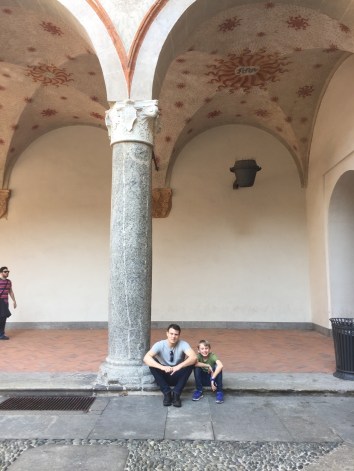
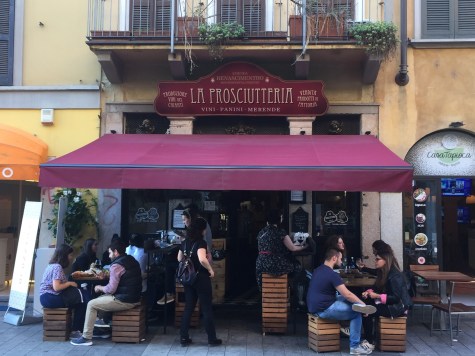
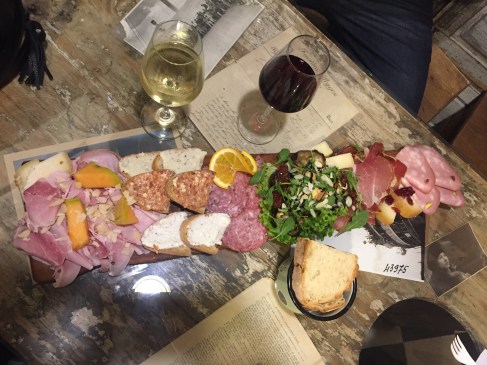




 Since they decided not to partake in our meat and cheese plate at La Prosciutteria, we made a quick stop for the kid’s dinner at McDonalds. I’m pretty sure we’ve been to a McDonalds in every country we’ve visited with the kids.


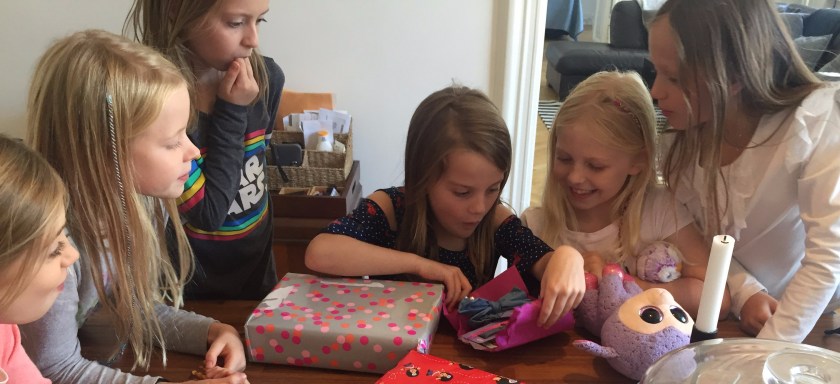
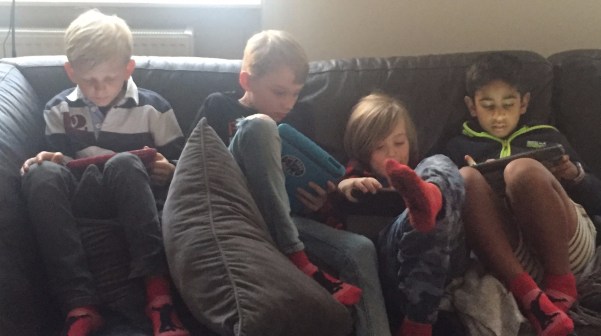
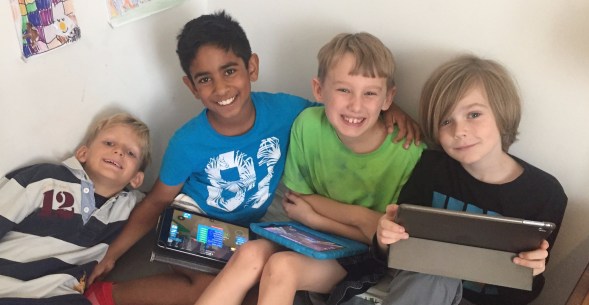
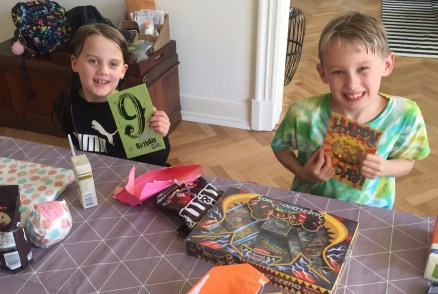
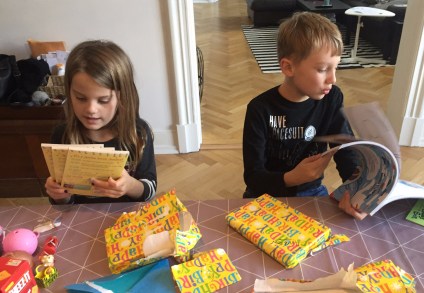
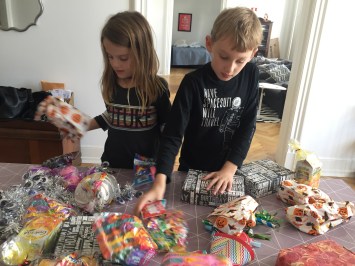
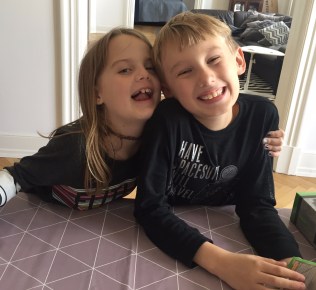
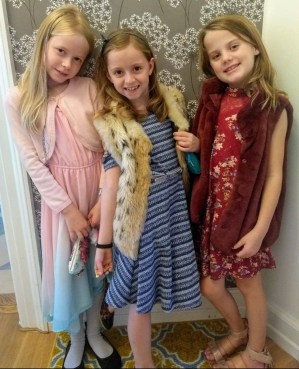
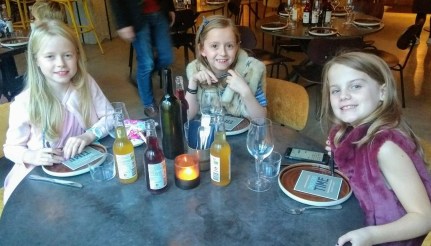
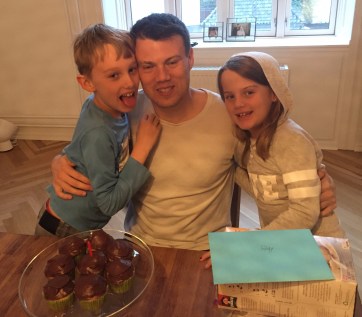
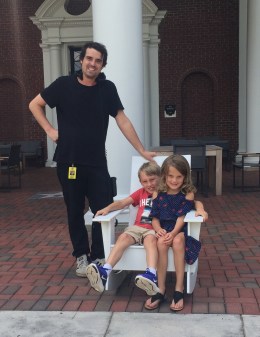
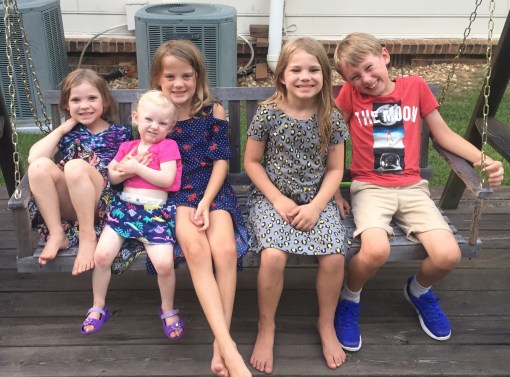
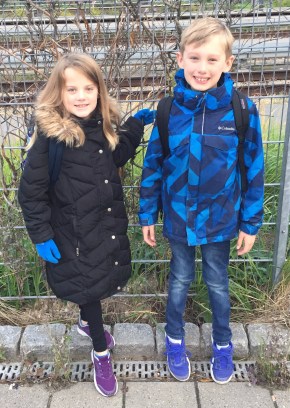 Katherine and Andrew turned nine this year. They decided on having sleepovers to celebrate. We decided to do them back to back and knock them out in one weekend. It was exhausting, but everyone had a great time.
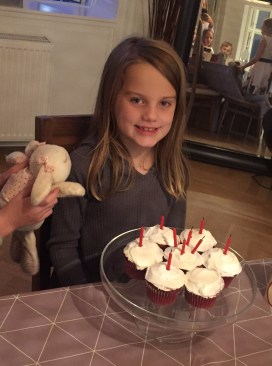 They girls were high energy and high volume. They made slime, got their nails painted, watched The Greatest Showman (twice), giggled a lot, and ate quesadillas, nachos, and danish waffles. They went to bed late, if at all.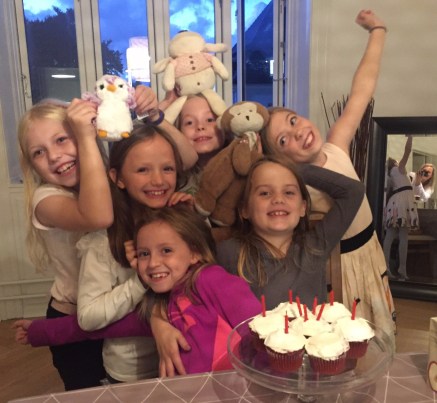
 The boys were much lower maintenance. They played video games, had pillow fights, played on their iPads, watched Infinity Wars, and ate pizza and pancakes. They also slept pretty well, but were up super early.





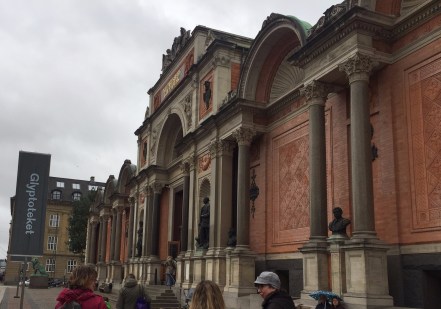


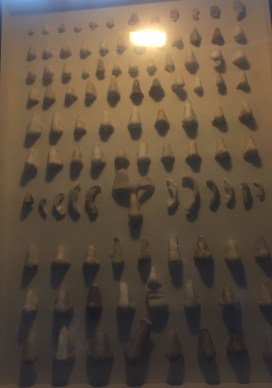


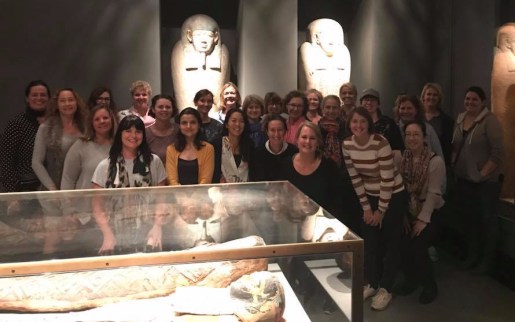


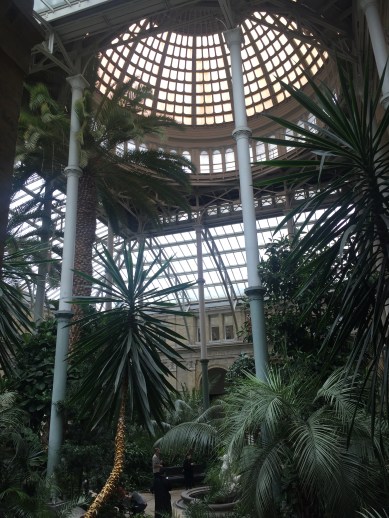 The Museum also has a beautiful domed Winter Garden. (It also has a wing of paintings, but we didn’t visit it that day.)
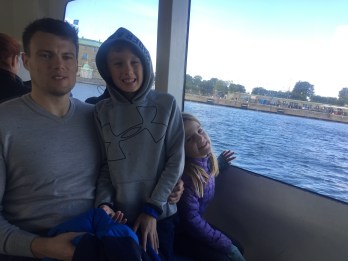 As per usual, a crepe for Katherine (Oreo and Nutella.) Andy doesn’t mind her always getting a crepe because he usually gets to finish it. (I don’t like Nutella, I know.)
 Andrew and his beloved burger and fries. He even approved of the ketchup.
 I was in the mood for a big salad.
 And Andy got fresh pasta.


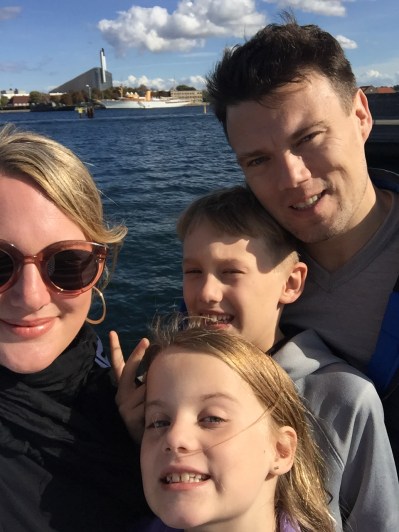 Reffen from our side of the harbor.
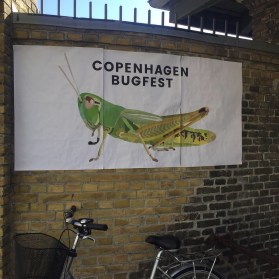 We tried some freeze dried bugs at Copenhagen Bugfest.


 We even brought some home with us.





















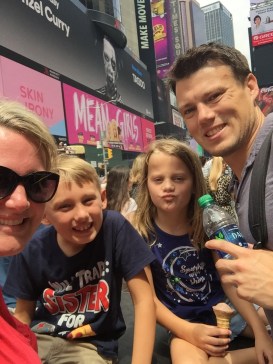


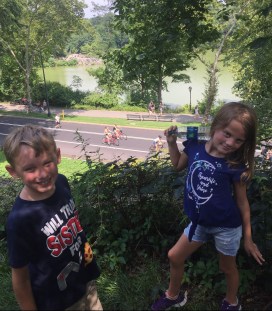


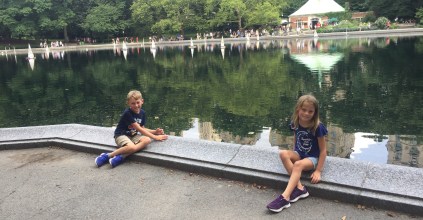
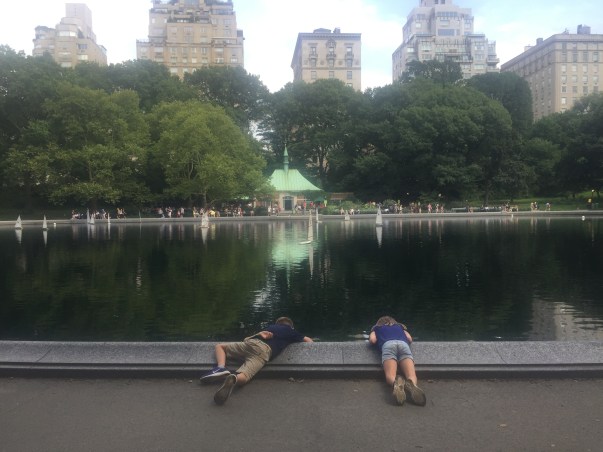









 xoxo-sk